
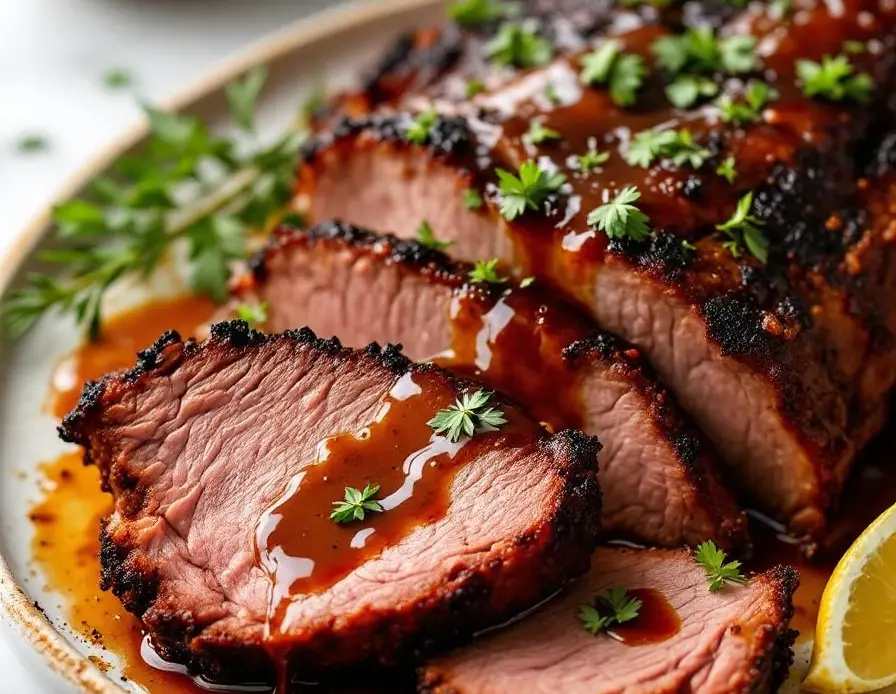
Starting with a big, fat brisket takes some prep. I trim the fat layer, then rub it down with salt, pepper, and a smoky paprika paste, getting my hands sticky and smelling like spice and raw meat.
Getting the smoker going is a process—wet wood chips soak, coals ignite, and you keep an eye on the temperature. It’s a slow dance of patience, waiting for the meat to soak up the smoke and develop that firm, barked crust.
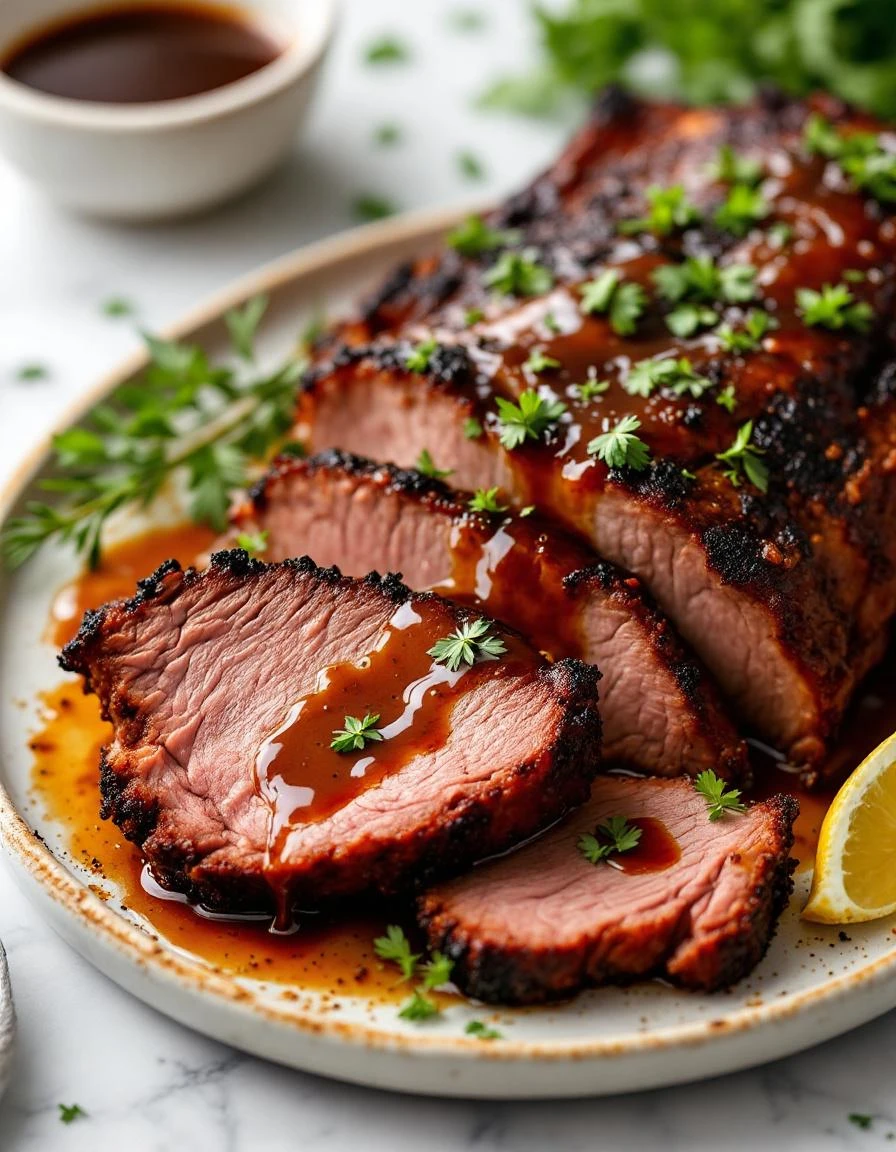
The crackle of the bark as I carve into the brisket, revealing the smoky, caramelized crust inside.
What goes into this dish
- Brisket: I pick a well-marbled piece, the fat melts into the meat during smoking, keeping it juicy. Skip the cheap cuts—they just won’t hold up through the long cook and turn dry.
- Salt and pepper rub: I go heavy on coarse salt and cracked black pepper, the foundation for that savory bark. Feel free to add garlic powder or chili for a flavor boost, but don’t skimp on the basics.
- Paprika: I use smoked paprika for that deep, smoky sweetness that seeps into the crust. Swap with sweet paprika if you want a milder flavor, but skip the smoky variety if you prefer a subtler crust.
- Wood chips: Hickory is my go-to, filling the air with that unmistakable bacon-like aroma. Applewood or oak work too—just soak them well to avoid bitter, sooty smoke.
- Apple cider vinegar: I keep a spray bottle handy to spritz the brisket during the smoke—brightens the flavor and keeps it moist. Lemon juice or beer can work in a pinch, but they won’t add that zing.
- Beef broth or water: I add a bit to the pan to create steamy humidity, helping the meat stay tender. Skip if you prefer a drier bark, but watch out for it drying out over those hours.
Smoked Brisket
Ingredients
Equipment
Method
- Trim excess fat from the brisket, leaving a thin layer for flavor and moisture during smoking.
- Mix coarse salt, cracked black pepper, and smoked paprika in a small bowl to create the dry rub.
- Rub the seasoning mixture generously all over the brisket, pressing it into the meat to form an even coat.
- Let the brisket sit at room temperature for about 30 minutes to absorb the flavors while you prepare the smoker.
- Preheat your smoker to a steady temperature of around 225°F, adding soaked wood chips to the coals or smoker box.
- Place the brisket on the smoker grates, fat side up, and insert a meat thermometer to monitor internal temperature.
- Maintain a steady temperature, spritz the brisket with apple cider vinegar every 45 minutes to keep it moist, and add beef broth to the pan to create humidity.
- Smoke the brisket for about 6 hours, or until the internal temperature reaches around 195-200°F and the bark is deep and crispy.
- Remove the brisket from the smoker, tent loosely with foil, and let it rest for at least 30 minutes to reabsorb juices.
- Slice the smoked brisket against the grain in thin slices, revealing the juicy, smoky interior with a crispy bark.
- Serve the slices hot, enjoying the rich aroma and tender, flavorful meat.
Common Mistakes and How to Fix Them
- FORGOT to monitor smoker temperature → Use a reliable thermometer to keep it steady.
- DUMPED the marinade early → Let the brisket sit overnight for deeper flavor.
- OVER-TORCHED the crust → Keep an eye on the heat, avoid direct flames near the meat.
- CUT into the brisket too soon → Rest it at least 30 minutes to lock in juices.
Make-Ahead and Storage Tips
- You can prep the brisket the day before—rub it with spices, then refrigerate overnight for deeper flavor penetration.
- Wrap the cooked brisket tightly in foil and store in the fridge for up to 3 days. Freezing extends this to about a month, but expect some moisture loss.
- The smoky, savory flavor intensifies after resting; reheating may mellow the crust slightly but keeps the meat juicy.
- Reheat in a low oven (around 250°F) covered in foil, checking every 20 minutes until hot and the bark feels firm again.
- Let the brisket rest for at least 15 minutes after reheating to allow juices to redistribute, ensuring moist slices.
FAQs
1. How does the smoke flavor develop?
Smoked brisket develops a rich, smoky aroma that hits your nose first, followed by a tender, juicy bite that melts in your mouth.
2. What should the crust feel and smell like?
The crust should feel firm and slightly crispy when pressed, with a deep, smoky smell lingering on your fingers after slicing.
3. Why is resting the meat important?
Let the brisket rest covered loosely with foil for at least 30 minutes; the juices settle, and the meat becomes more tender and flavorful.
4. How should I reheat leftovers?
Reheat in a low-temp oven, covered tightly. The meat should steam gently, and you’ll hear a slight hiss as it warms through.
5. What’s the best way to slice smoked brisket?
Use a sharp slicing knife, cut against the grain in thin slices, and listen for that satisfying, clean cut through the bark and meat.

Hi, I’m Madison Lane, the cook, recipe creator, and heart behind this kitchen. Food has been part of my life for as long as I can remember. Some of my earliest memories are of standing beside my dad while he cooked, watching him move comfortably around the kitchen, tasting sauces, and explaining why patience mattered just as much as seasoning.
