
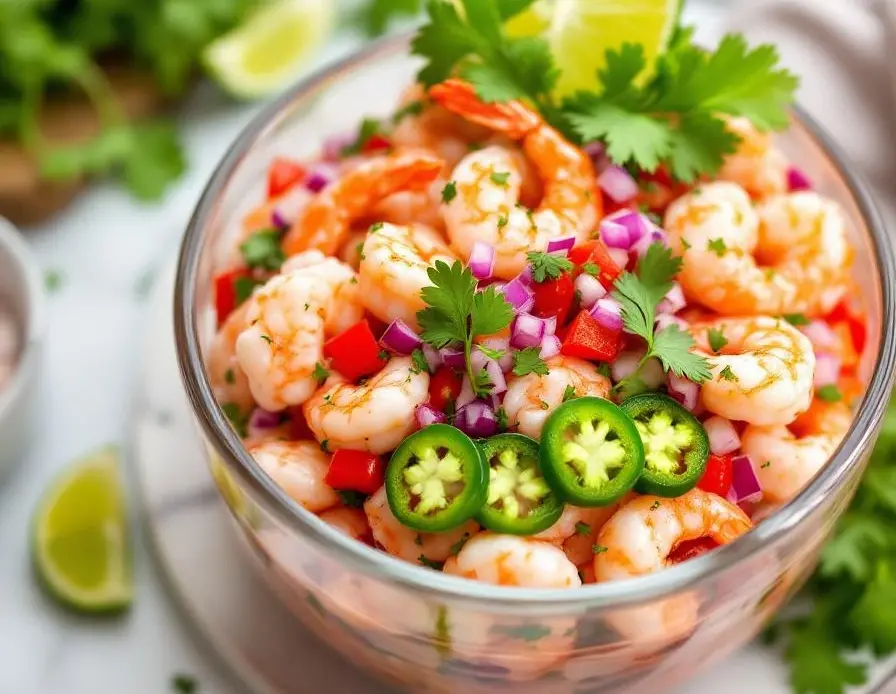
Making shrimp ceviche means standing over a cutting board, peeling and deveining shrimp, and then chopping them into small, irregular pieces. The citrus juice quickly breaks down the shrimp, giving it a firm yet slightly translucent texture that changes with time.
It’s a tactile process—squeezing limes, dicing onions, tasting as you go—no fancy gadgets needed. You’ll get your hands a little sticky, and the smell of fresh lime and raw seafood will fill the kitchen.
The squelch of diced shrimp as you toss it with citrus, hearing the pop of fresh lime and the crunch of onion—it’s a messy, tactile process that grounds you in each step.
What goes into this dish
- Shrimp: I use wild-caught, deveined shrimp, but you can swap for peeled, cooked shrimp if you’re short on time. The raw ones give a firmer bite, while cooked shrimp are softer and milder in flavor.
- Lime juice: Fresh lime is key—squeezing bright, zesty aroma that wakes up all the other ingredients. If you only have bottled lime juice, add a touch more to compensate for the brightness lost.
- Red onion: Finely diced red onion adds crunch and a sharp bite, but shallots or scallions work in a pinch if you want a milder or greener flavor profile.
- Cilantro: Fresh cilantro leaves are essential for that herbal punch. If you dislike cilantro, try parsley for a cleaner, less pungent note that still brightens the dish.
- Salt: I prefer sea salt or flaky salt for texture. Kosher salt works too—just be mindful of the quantity, as it amplifies the citrus and seafood flavors.
- Optional chili: A dash of chopped jalapeño or serrano adds heat and a smoky note. Skip if you want it milder, but don’t skip that kick if you like spice.
- Additional tweaks: A splash of olive oil or a touch of avocado can add richness. If you’re watching calories, skip the oil and focus on the citrus and seafood’s natural flavors.
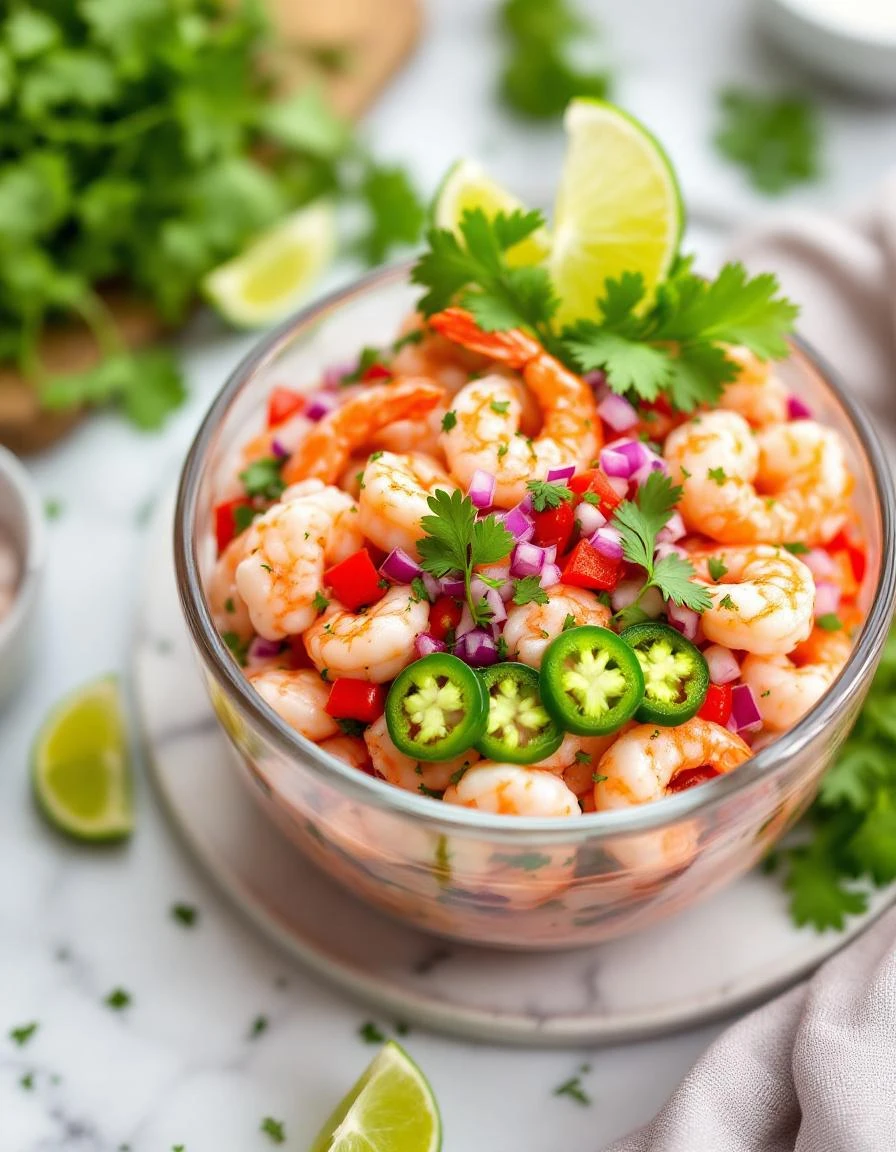
Shrimp Ceviche
Ingredients
Equipment
Method
- Start by chopping the raw shrimp into small, irregular pieces on a clean cutting board. Place them in a mixing bowl and set aside.
- Juice the fresh limes until you have about half a cup of bright, citrusy liquid. Pour the lime juice over the chopped shrimp, ensuring they are fully submerged. This is what will 'cook' the shrimp and give it a firm, slightly translucent appearance.
- Finely dice the red onion and add it to the bowl with the shrimp and lime. The onion will add crunch and a sharp bite that balances the citrus.
- Chop the fresh cilantro leaves and stir them into the mixture, giving the ceviche a bright, herbal flavor. If you like some heat, add the chopped jalapeño now for a spicy kick.
- Sprinkle the ceviche with sea salt, then gently mix everything together, ensuring the flavors combine evenly. Taste and adjust the salt if needed.
- Cover the bowl with plastic wrap and refrigerate for 15-20 minutes. During this time, the lime juice will fully 'cook' the shrimp, turning it firm and slightly opaque, while the flavors meld beautifully.
- Once ready, give the ceviche a gentle stir, then serve chilled in small bowls or glasses, garnished with additional cilantro or lime wedges if desired. Enjoy immediately for the freshest, most vibrant flavor and texture.
Notes
Common mistakes and how to fix them
- FORGOT to peel and devein shrimp, resulting in tough bites. Always prep shrimp thoroughly before chopping.
- DUMPED too much citrus juice, making ceviche watery. Use just enough to coat evenly, then taste and adjust.
- OVER-TORCHED the shrimp in marinade, turning it rubbery. Keep it immersed for just 15-20 minutes until opaque.
- MISSED balancing salt, causing dull flavor. Taste as you go and add salt gradually for that briny punch.
Make-Ahead and Storage Tips
- Prepare the shrimp: Peel, devein, and chop the shrimp a day ahead. Keep chilled in an airtight container for up to 24 hours.
- Juice the limes early: Freshly squeeze lime juice and store in a jar. It’s best used within 24 hours to keep that bright, citrusy punch.
- Dice the onion and chop cilantro: Do this a few hours in advance and store separately in the fridge. Keeps the crunch fresh and herbs vibrant.
- Marinate the shrimp: Combine with lime juice and chill for 1-2 hours. The citrus will tenderize and flavor the seafood without overcooking.
- Flavor develops over time: The ceviche gains a slightly more intense citrus aroma after sitting for a few hours. Taste before serving and adjust salt if needed.
- Reheating and serving: Serve chilled. If it sits out too long, the shrimp might turn a little firmer—best enjoyed fresh or within 24 hours.
FAQs
1. Can I use cooked shrimp for ceviche?
Use fresh, peeled raw shrimp. They snap with a firm bite and taste briny, like ocean air.
2. How do I know when the shrimp are ‘cooked’ in ceviche?
Lime juice should be bright and citrusy, with a fragrant aroma. Bottled juice can work, but fresh is better.
3. Can I substitute the onion with something milder?
Red onion provides a sharp crunch and pungent aroma. Shallots or scallions give a milder, greener touch if you prefer.
4. What can I use instead of cilantro?
Cilantro adds a fresh, herbal brightness with a slightly peppery scent. Parsley is a good alternative if you’re not a cilantro fan.
5. How much salt should I add?
Salt enhances all flavors, adding a briny, savory note. Flaky or sea salt gives a nice texture and punch.

Hi, I’m Madison Lane, the cook, recipe creator, and heart behind this kitchen. Food has been part of my life for as long as I can remember. Some of my earliest memories are of standing beside my dad while he cooked, watching him move comfortably around the kitchen, tasting sauces, and explaining why patience mattered just as much as seasoning.
