
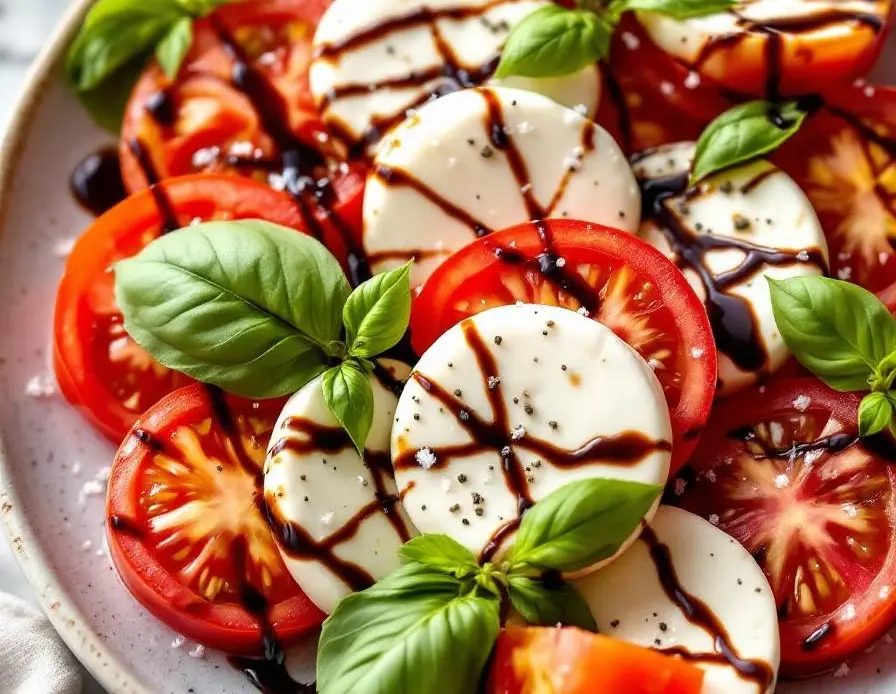
Making a Caprese Salad means handling fresh ingredients that demand a gentle touch—slicing tomatoes without crushing, tearing basil leaves instead of chopping, and carefully layering slices so they don’t slip apart. It’s a tactile dish, not just assembled but assembled with intention and patience.
As you build it, you’ll notice the textures—moist, firm, leafy—and how they come together. No fancy tools needed, just a sharp knife and a sense for when ingredients are ripe enough to bring their best to the plate.
listening to the gentle squish of ripe tomatoes when slicing, feeling the coolness of fresh mozzarella against warm fingertips, and hearing the soft rustle of basil leaves as I tear them apart.
Key ingredients and swaps
- Tomatoes: I prefer heirlooms for that juicy, complex flavor and vibrant color—slice them gently to avoid squishing. If you can’t find heirlooms, ripe vine tomatoes work just as well, but skip the mealy ones.
- Fresh mozzarella: Nothing beats soft, milky mozzarella—tear it into uneven pieces to keep the texture rustic. If you want a cheaper option, burrata adds creaminess, but skip processed cheese, it won’t have the same charm.
- Fresh basil: Tear the leaves instead of chopping—this releases the oils and aroma better. If basil’s scarce, try oregano or arugula for a different but still fresh note, but avoid dried herbs—they’re not the same.
- Olive oil: Use good-quality extra virgin—look for a grassy, peppery nose. If you don’t have it, a light drizzle of avocado oil can work, but steer clear of bland vegetable oil, it dulls the flavors.
- Salt and pepper: Kosher salt and freshly cracked pepper are best—season generously but taste as you go. If you only have table salt, reduce the amount to avoid over-salting, and skip pre-ground pepper—it loses punch.
- Optional balsamic: A drizzle of aged balsamic vinegar adds a sweet tang—use sparingly to avoid overpowering the delicate ingredients. Skip it if you prefer a more straightforward flavor or want to keep it light.
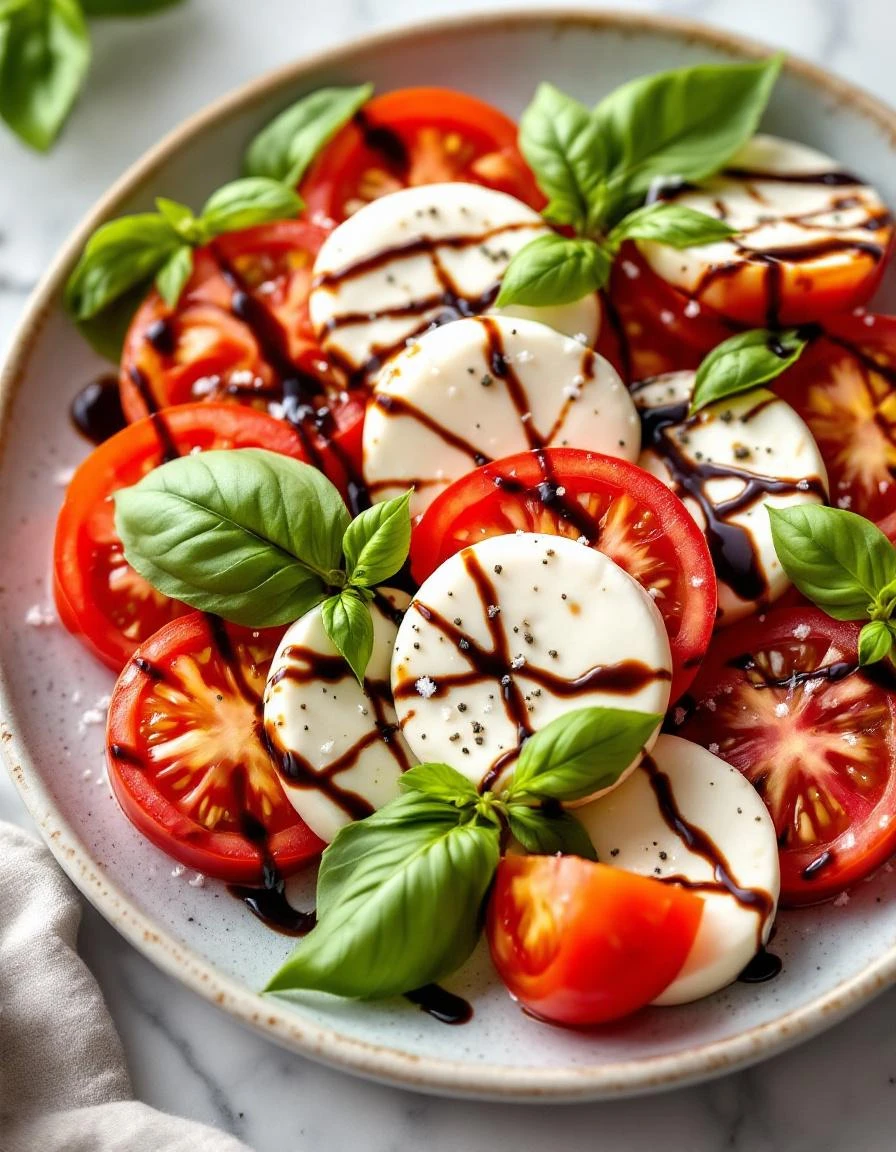
Classic Caprese Salad
Ingredients
Equipment
Method
- Slice the heirloom tomatoes into thick rounds, feeling their juicy, firm texture as you cut through the skin with a sharp knife. Arrange the slices on a large serving platter, slightly overlapping for visual appeal.
- Tear the fresh mozzarella into uneven, rustic chunks using your fingers; this gentle tearing preserves its soft, milky texture and keeps it look authentic. Scatter the torn mozzarella over the tomatoes, aiming for a balanced distribution.
- Gently tear the fresh basil leaves into smaller pieces, releasing their fragrant oils. Sprinkle the torn basil evenly over the salad for bursts of aroma and color.
- Drizzle a good-quality extra virgin olive oil evenly over the assembled ingredients, feeling the rich, grassy aroma as it touches the surface. This enhances the flavor and brings everything together.
- Season the salad generously with flaky kosher salt, tasting as you go, and finish with a sprinkle of freshly cracked black pepper to add depth and a slight heat.
- If desired, lightly drizzle aged balsamic vinegar over the top for a sweet, tangy contrast that complements the freshness of the ingredients.
- Let the salad sit for a few minutes at room temperature to allow the flavors to meld and the aromas to intensify, then serve immediately to enjoy the vibrant colors and fresh textures.
Common mistakes and how to fix them
- FORGOT to taste before serving—add a pinch more salt or a splash of vinegar to balance.
- DUMPED too much oil—use a light hand, the ingredients should shine through, not drown.
- OVER-TORCHED the basil—tear gently and add last to preserve aroma and color.
- MISSED the ripeness check—wait for tomatoes to soften slightly and smell sweet for optimal flavor.
Make-Ahead and Storage Tips
- Tomatoes can be sliced a few hours ahead and kept in the fridge—cover loosely to prevent moisture buildup.
- Mozzarella is best torn just before serving, but can be prepared an hour in advance and stored in an airtight container in the fridge.
- Basil leaves can be torn and stored in a damp paper towel inside a plastic bag—use within a day for best aroma.
- Drizzle olive oil and season with salt and pepper right before assembling to keep flavors fresh and vibrant.
- The salad tastes best when assembled just before eating, but can sit for up to 30 minutes at room temperature without losing integrity.
- Refrigerating assembled salad dulls the flavors; re-taste and adjust seasoning if it sits longer than an hour.
FAQs
1. How do I pick the best tomatoes?
Choose ripe, fragrant tomatoes—they should smell sweet and feel slightly soft but not mushy. Bright red or deep purple hues signal good ripeness.
2. What kind of mozzarella works best?
Use fresh mozzarella that’s soft and milky—ideally on the softer side. Tear it into uneven chunks to keep that rustic feel, not slice it into perfect circles.
3. Should I chop or tear basil?
Tear basil leaves gently, it releases more aroma and keeps the leaves intact. Ripping helps preserve their vibrant green color and fresh scent.
4. What’s the best olive oil for this salad?
Opt for good-quality extra virgin olive oil—peppery and grassy. Drizzle sparingly, just enough to highlight the ingredients without drowning them.
5. How much salt and pepper should I use?
Season with flaky sea salt and freshly cracked pepper—taste after each addition. The salt intensifies sweetness and balances acidity, making everything pop.

Hi, I’m Madison Lane, the cook, recipe creator, and heart behind this kitchen. Food has been part of my life for as long as I can remember. Some of my earliest memories are of standing beside my dad while he cooked, watching him move comfortably around the kitchen, tasting sauces, and explaining why patience mattered just as much as seasoning.
