
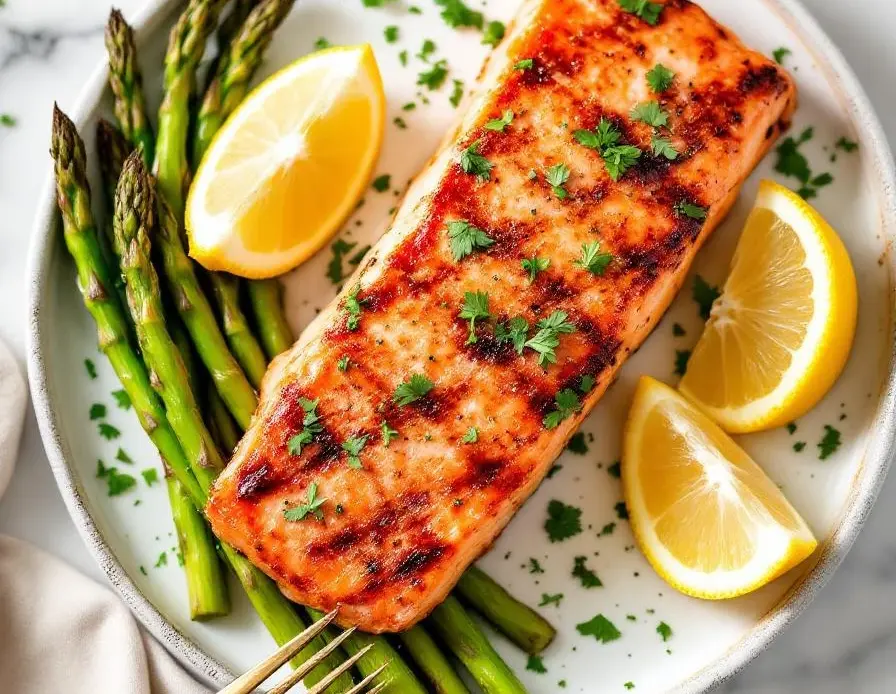
You start by patting the salmon dry, feeling the firm flesh under your fingertips, then brushing it with oil and seasoning. The asparagus gets a quick rinse, ends trimmed, ready for the grill, which is already hot enough to make a sizzle.
Laying everything on the grill feels deliberate—salmon skin side down first, asparagus laid out in a single layer—listening to the snap and sizzle as they cook. You peek under the fish, checking for a golden crust, and turn the spears when they start to char slightly.
The crackle of the salmon’s skin as it hits the hot grill, followed by the gentle sizzling of asparagus, creates a symphony of sounds that signals dinner is near.
What goes into this dish
- Salmon fillet: I look for firm, bright pink flesh with a little shine—skip if it smells fishy. You can swap in Arctic char if you want a milder, buttery flavor, or use smoked salmon for a cold, smoky twist, but then skip grilling.
- Asparagus: Fresh, firm spears with tightly closed tips are best—skip limp or woody ends. Thin spears grill quicker, but thicker ones hold up better—just adjust timing. For a different crunch, try green beans or snap peas, which add a sweet, crisp bite.
- Olive oil: I brush it on to prevent sticking and encourage browning—use any neutral oil if you’re out, but skip if you prefer a less greasy feel. For extra flavor, add a squeeze of lemon or a pinch of garlic powder before grilling.
- Lemon: Sliced fresh lemon adds brightness and a slight smoky char when grilled—if you don’t have lemons, lime works, or skip it for a more savory profile. The citrus aroma really wakes up the fish and veggies.
- Salt and pepper: Basic but essential—don’t skimp on seasoning; I like flaky sea salt for crunch. You can substitute with smoked paprika or a spice blend if you want a different flavor kick, but avoid over-salting.
- Garlic (optional): Minced fresh garlic adds aromatic punch—skip if you prefer a milder taste or use garlic powder for convenience. Be mindful not to burn it on the grill, as it turns bitter quickly.
- Herbs (like dill or parsley): Fresh herbs sprinkled after grilling brighten everything up—skip if you dislike herbs or use dried for a subtler touch, but don’t forget the fresh aroma right off the grill.
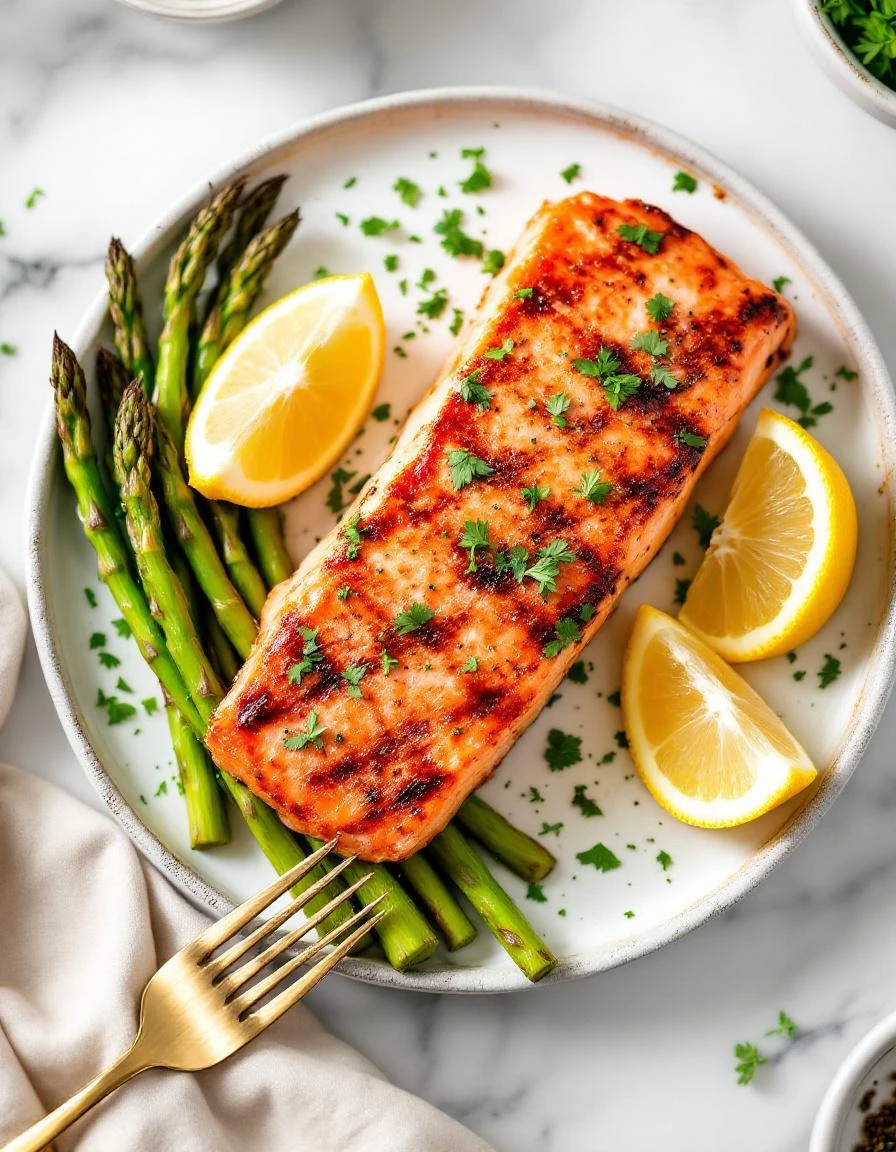
Grilled Salmon with Asparagus and Lemon
Ingredients
Equipment
Method
- Pat the salmon fillets dry with paper towels and brush them lightly with olive oil. Season generously with salt and pepper on both sides.
- Trim the tough ends off the asparagus and rinse them under cold water. Pat dry and brush with a little olive oil, then season with salt and pepper.
- Heat the grill to medium-high heat until hot and slightly smoky. Place the salmon fillets skin side down on the grill, hearing a satisfying sizzle.
- Lay the asparagus spears in a single layer on the grill, alongside the salmon. Grill the asparagus for about 4-6 minutes, turning occasionally, until they develop some charring and are tender yet crisp.
- Check the salmon after about 4-5 minutes; it should develop a golden, crispy skin and the flesh should turn opaque and flaky. Carefully flip the fillets and cook for another 2-3 minutes until done.
- Place lemon slices on the grill during the last minute to add a smoky, caramelized flavor. Remove the salmon, asparagus, and lemon from the grill once they reach the desired doneness.
- Transfer the salmon to a serving plate, arrange the grilled asparagus alongside, and squeeze fresh lemon over everything for brightness. Garnish with chopped herbs for a fresh touch.
- Serve immediately to enjoy the crispy skin, tender fish, and smoky, crisp asparagus with a hint of citrus and herbs.
Common mistakes and how to fix them
- FORGOT to oil the grill grates? DUMP some oil on a paper towel and wipe before cooking.
- DUMPED the fish in the pan without checking hot spots? REARRANGE the grill to avoid uneven cooking.
- OVER-TORCHED the asparagus? LOWER the heat or move to cooler spots, then baste with oil.
- SERVED the salmon cold? REHEAT gently in a warm oven, checking for warm, flaky texture.
Make-Ahead and Storage Tips
- Pre-chop the asparagus ends and store in a sealed container—keeps them fresh for a day or two in the fridge.
- Marinate the salmon with oil, salt, and herbs a few hours ahead—flavors deepen and skin crisps better when grilled.
- Freeze the salmon if not using within a day—wrap tightly, good for up to 2 months; thaw in fridge overnight.
- Refrigerate cooked leftovers in an airtight container for up to 2 days—reheat gently to avoid drying out, with a quick warm-up in the oven or on low heat on the stove.
- Flavors mellow and intensify after refrigeration—additional lemon or herbs can brighten them up before serving.
- Reheating: warm in a low oven or skillet until just heated through—look for a flaky, moist texture, and avoid overcooking to keep the skin crispy.
FAQs
1. How do I tell if the salmon is cooked?
Feel the firm, slightly springy flesh of the salmon—avoid slimy or overly soft fish. The asparagus should snap when bent, with a bright green hue and tight tips.
2. What should I look for when grilling?
Check for a golden, crispy skin and opaque flesh. The asparagus should be tender but still have a slight crunch when you bite into it.
3. How will I know when it’s done?
The salmon’s aroma should be rich and slightly smoky, with a fresh, citrus scent from the lemon. Asparagus gives off a grassy, slightly charred smell.
4. Can I use a different fish?
Use a meat thermometer if unsure—145°F in the thickest part of the fish. The asparagus should be tender enough to pierce easily with a fork.
5. Can I substitute the asparagus?
Yes, Arctic char or trout can work well—look for similar firmness. They might cook slightly faster or slower, so keep an eye on the grill.

Hi, I’m Madison Lane, the cook, recipe creator, and heart behind this kitchen. Food has been part of my life for as long as I can remember. Some of my earliest memories are of standing beside my dad while he cooked, watching him move comfortably around the kitchen, tasting sauces, and explaining why patience mattered just as much as seasoning.
