
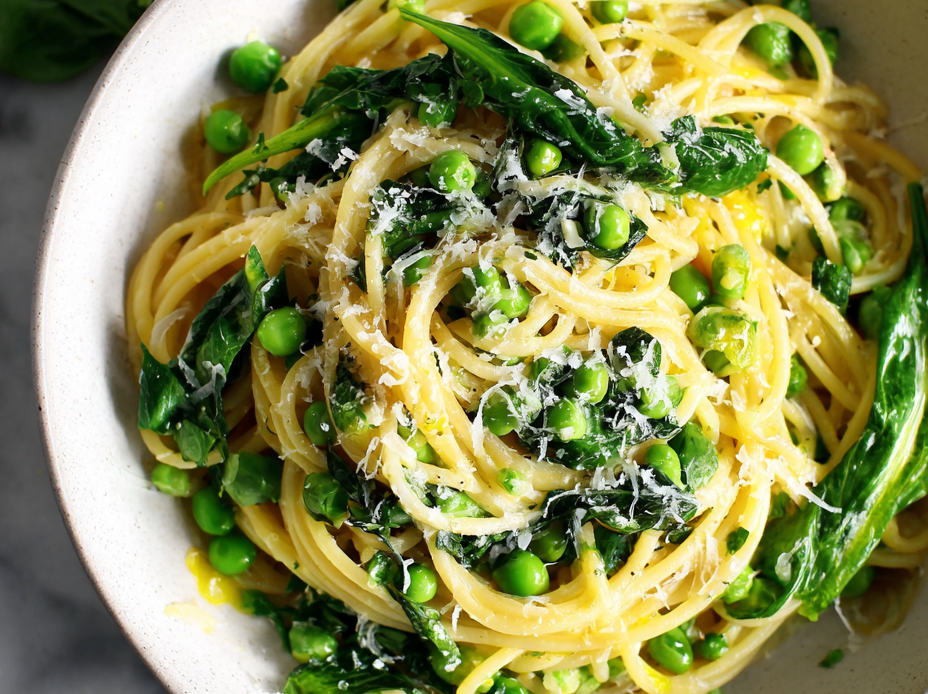
Peas and spinach often get pushed aside for flashier vegetables, but they have a quiet strength that shines in a simple pasta. This dish is about celebrating those overlooked greens, turning them into the main event with just a few pantry staples. It’s a humble, quick dinner that feels like a small act of kindness at the end of a busy day.
I love how the fresh sweetness of peas and the earthy bite of spinach come alive with a splash of olive oil and a squeeze of lemon. It’s one of those meals that come together fast but tastes like you fussed over it for ages. Plus, there’s something about chopping and tossing greens that clears my head—simple, honest, and deeply satisfying.
Focusing on the overlooked beauty of simple greens—how peas and spinach can be the star of a quick, comforting pasta dish that feels like a warm hug on a busy night.
The story behind this recipe
- This recipe started as a way to use up a bag of frozen peas and a big bunch of spinach that was wilting in my fridge. I’d been craving something bright and fresh but didn’t want to fuss with complicated sauces. One night, I tossed everything together with pasta, a squeeze of lemon, and a handful of cheese, and it just clicked.
- It’s funny how some of the simplest meals come from a moment of improvisation—no plan, just what’s on hand. That first bite was a revelation, the sweetness of peas and the earthy spinach mingling perfectly. Since then, I’ve kept tweaking it, leaning into those fresh, vivid flavors that remind me of spring even when it’s still cold outside.
- heading: ‘The story behind this recipe’
Ingredient breakdown
- Frozen peas: I love how their bright, sweet burst defies the cold. If you use fresh, blanch them quickly to preserve that pop.
- Spinach: It wilts fast and turns a vibrant green with a slightly earthy aroma. Skip the boiling water—just toss it straight into the hot pasta to keep flavor and color vivid.
- Olive oil: I prefer a good extra virgin that shimmers with a peppery kick. If you only have milder oil, add a pinch of red pepper flakes for a subtle heat.
- Lemon: The zest and juice brighten everything. Use a microplane for zest to get those tiny, fragrant curls, and don’t skip the squeeze—makes the dish sing.
- Pasta: I reach for a sturdy shape like fusilli or penne that holds the greens and sauce well. Whole wheat adds a nutty depth if you’re feeling it.
- Garlic: Sauté until golden and fragrant, about 30 seconds. If it browns too quickly, turn down the heat—bitter garlic ruins the vibe.
- Cheese: I lean on Pecorino or Parmesan, freshly grated. If you want a creamier finish, stir in a dollop of ricotta—just watch it melt into silky goodness.
Spotlight on key ingredients
Peas and Spinach:
- Frozen peas: Their bright, sweet burst defies the cold. When cooked, they pop with a juicy, fresh flavor. If using fresh, blanch quickly to preserve that lively bite.
- Spinach: It wilts quickly and turns a vivid, slightly glossy green. During cooking, it softens and releases an earthy aroma that amplifies the dish’s freshness.
Notes for ingredient swaps
- Fresh peas: If frozen aren’t available, try fresh peas in early spring for a sweeter, crisper bite.
- Spinach: Swap in kale or Swiss chard if you prefer a more robust, slightly bitter greens that hold up well during cooking.
- Olive oil: Use avocado oil for a milder, buttery finish or toasted sesame oil for an aromatic, nutty twist—just a splash!
- Lemon: Lime or even a splash of vinegar can brighten the dish if lemon isn’t on hand, but expect a slightly different tang.
- Pasta: Whole wheat or chickpea pasta adds extra fiber and protein, with a nuttier flavor that pairs well with greens.
- Garlic: Shallots or leeks can be minced and sautéed as a milder, sweeter alternative to garlic.
- Cheese: Pecorino can be replaced with aged cheddar or a dollop of ricotta for creaminess—each brings a different richness.
Equipment & Tools
- Large pot: Boil pasta and peas efficiently
- Sauté pan: Cook greens and toss everything together
- Colander: Drain pasta and peas
- Wooden spoon: Stir and toss ingredients gently
- Microplane: Zest lemon finely for aroma and flavor
Step-by-step guide to pea and spinach pasta
- Equipment & Tools: Gather a large pot for boiling, a sauté pan for greens, a colander, a wooden spoon, and a microplane for zest.
- Fill the pot with water, add a good pinch of salt, and bring to a rolling boil at 100°C (212°F).
- Add the pasta to the boiling water. Cook according to package instructions until al dente, about 9 minutes. Stir occasionally.
- While pasta cooks, heat a tablespoon of olive oil in the sauté pan over medium heat (about 160°C / 320°F).
- Add minced garlic, sauté for 30 seconds until fragrant and golden, beware of browning, turn down heat if needed.
- Add frozen peas to the pasta water in the last 2 minutes of cooking. Drain pasta and peas together, reserving a cup of starchy water.
- Toss the drained pasta and peas into the sauté pan with garlic. Stir gently to coat and warm through for about 1 minute.
- Add a squeeze of lemon juice, lemon zest, and a handful of chopped spinach. Cook until spinach wilts, about 1-2 minutes.
- If the mixture looks dry, add a splash of the reserved pasta water to loosen and create a silky sauce.
- Taste and adjust with salt, pepper, or more lemon if needed. Remove from heat.
- Rest for 1-2 minutes, then plate the pasta. Finish with grated cheese and a drizzle of olive oil.
- Serve immediately, with a final squeeze of lemon if desired, for bright, fresh flavor.
Serve immediately, garnished with cheese and a drizzle of olive oil. Squeeze fresh lemon over for extra brightness. Enjoy while warm and fragrant.
How to Know It’s Done
- Pasta is cooked al dente, with a firm bite and no chalky center.
- Peas are bright and tender, not mushy or overly soft.
- Spinach is wilted but retains a vibrant green, slightly glossy appearance.
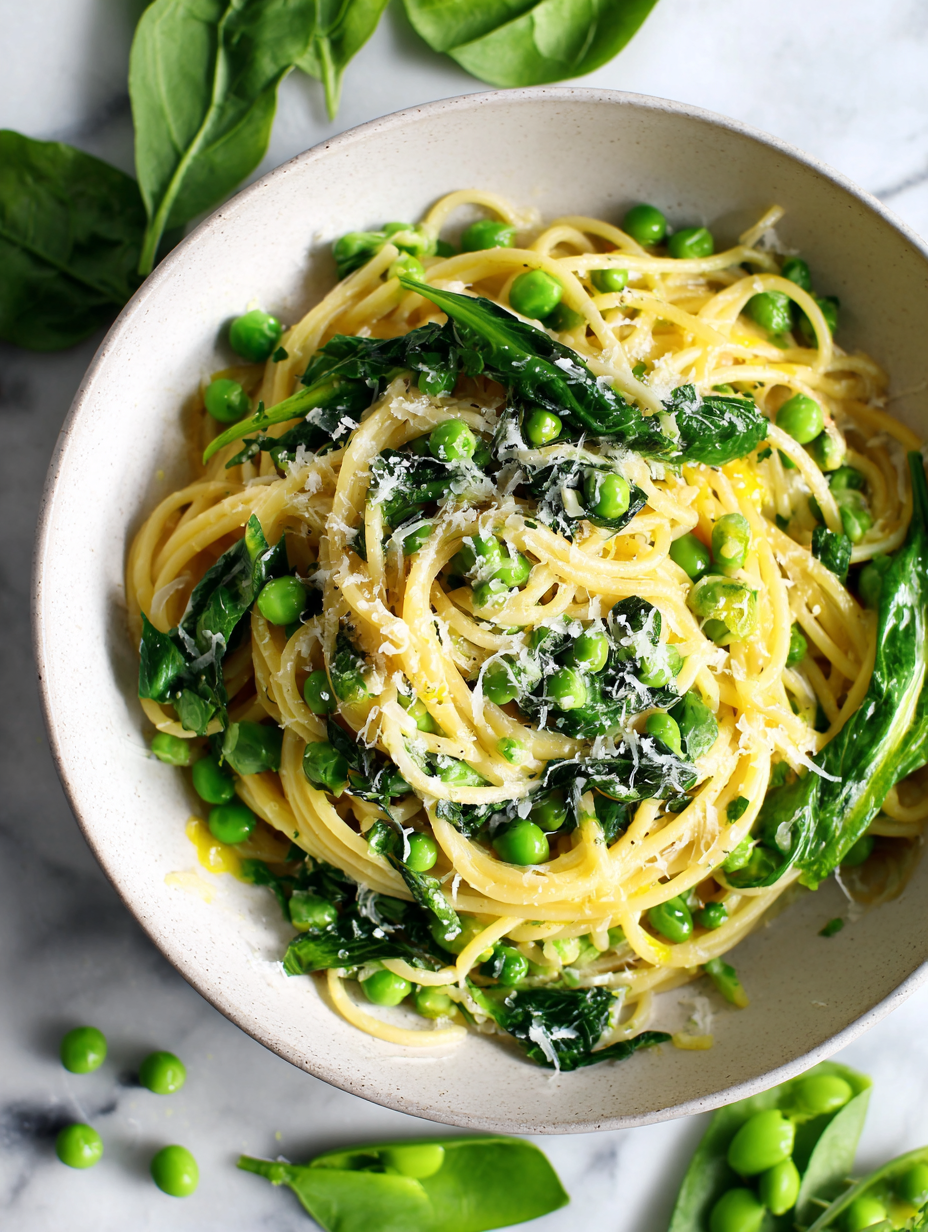
Peas and Spinach Pasta
Ingredients
Equipment
Method
- Fill a large pot with water, add a generous pinch of salt, and bring to a rolling boil. Once bubbling, add the pasta and cook until al dente, about 9 minutes, stirring occasionally.
- While the pasta cooks, heat olive oil in a sauté pan over medium heat. Add minced garlic and sauté until fragrant and just golden, about 30 seconds, filling the kitchen with a warm, garlicky aroma.
- In the last 2 minutes of pasta cooking, add frozen peas to the boiling water. Once the pasta and peas are cooked, drain them together, reserving a cup of starchy water for later.
- Add the drained pasta and peas to the sauté pan with garlic. Toss gently to coat everything in the fragrant oil, warming the mixture for about 1 minute.
- Stir in a squeeze of lemon juice, followed by the lemon zest, and toss in the chopped spinach. Cook just until the spinach wilts and turns a vibrant green, about 1-2 minutes.
- If the mixture appears a bit dry, add a splash of the reserved starchy pasta water. Stir gently to create a silky, cohesive sauce that coats the pasta and greens beautifully.
- Taste the dish and adjust seasoning with a pinch of salt, pepper, or more lemon juice if needed. Remove from heat and sprinkle generously with freshly grated cheese.
- Serve immediately while warm, garnished with extra cheese and a final squeeze of lemon for brightness. Enjoy the vibrant flavors and fresh green colors in every bite.
Tips & tricks for the perfect dish
- Use frozen peas straight from the freezer to preserve their bright, sweet burst. No need to thaw beforehand.
- Sauté garlic until just golden and fragrant, about 30 seconds. Overcooking turns it bitter and harsh.
- Add the spinach at the end and stir until just wilted—avoid overdoing it to keep that vibrant green.
- Reserve a cup of starchy pasta water before draining; it helps loosen the sauce and adds creaminess.
- Toss the pasta and greens together over low heat briefly to meld flavors without overcooking the greens.
- Finish with a squeeze of lemon and grated cheese while the dish is still warm for maximum brightness and flavor.
- If the sauce feels too thick or dry, splash in a little reserved pasta water to achieve a silky, cohesive texture.
Common mistakes and how to fix them
- FORGOT to check pasta doneness → Taste test for al dente firmness.
- DUMPED greens too early → Add spinach late, just until wilted.
- OVER-TORCHED garlic → Reduce heat immediately, add more oil if needed.
- MISSED reserving pasta water → Use starchy water to loosen sauce if dry.
Quick Fixes and Pantry Swaps
- When sauce looks too thick, splash in a bit of hot pasta water to loosen it.
- If the peas are mushy, drain immediately and rinse with cold water to stop cooking.
- Splash olive oil if greens seem dull or dry—adds shine and flavor.
- Patch over a burnt garlic pan by deglazing with a splash of water or lemon juice.
- Shield overcooked spinach with a quick burst of fresh lemon—brightens and balances bitterness.
Prep, store, and reheat tips
- Prep the greens: Wash and chop spinach and measure out peas a day ahead; keep refrigerated for fresh brightness.
- Cook pasta in advance: Boil until just al dente, then rinse with cold water, store in an airtight container for up to 24 hours.
- Refrigerate leftovers: Store cooled pasta and greens in a sealed container for up to 2 days; reheat gently to preserve texture.
- Reheating tips: Warm in a skillet over low heat, adding a splash of water or oil to restore moisture and shine, until fragrant and heated through.
- Sensory note: Expect pasta to be slightly firmer and greens less vibrant after storage, but still flavorful with a quick reheat.
Top questions about pea and spinach pasta
1. Can I use fresh peas instead of frozen?
Frozen peas are best for a quick pop of sweetness and bright color. Fresh peas work if blanched first.
2. How do I prepare fresh peas for this recipe?
Yes, just blanch fresh peas in boiling water for 1-2 minutes until tender and vibrant.
3. When should I add the spinach?
Spinach wilts quickly; add it at the end and stir until just wilted to keep its green vibrancy.
4. What kind of olive oil is best?
Use a good quality extra virgin olive oil for shimmer and a peppery kick that enhances the greens.
5. How do I know when the pasta is al dente?
Cook the pasta until al dente, with a slight resistance in the center, about 9 minutes.
6. Why should I save pasta water?
Add reserved starchy pasta water gradually to loosen the sauce and achieve a silky finish.
7. Can I skip the lemon?
A squeeze of lemon brightens the dish, making flavors pop and greens feel fresh.
8. What if my sauce is too thick?
If the sauce gets too dry, a splash of pasta water will help loosen and bring everything together.
9. Can I use pre-grated cheese?
Use freshly grated Pecorino or Parmesan for the best flavor, adding it while the dish is warm.
10. How should I reheat this pasta?
Leftovers can be stored in the fridge for up to 2 days; reheat gently in a skillet with a splash of water.
This simple pasta dish reminds me how much flavor can come from just a few honest ingredients. It’s a quick, unpretentious meal that feels like a small celebration of greens and freshness, right when I need it most.
Cooking this feels like a little act of kindness—something easy to toss together but still satisfying enough to slow down and enjoy. It’s one of those recipes I keep coming back to, especially when I want that honest, vibrant green bite.
Hi, I’m Madison Lane, the cook, recipe creator, and heart behind this kitchen. Food has been part of my life for as long as I can remember. Some of my earliest memories are of standing beside my dad while he cooked, watching him move comfortably around the kitchen, tasting sauces, and explaining why patience mattered just as much as seasoning.
