
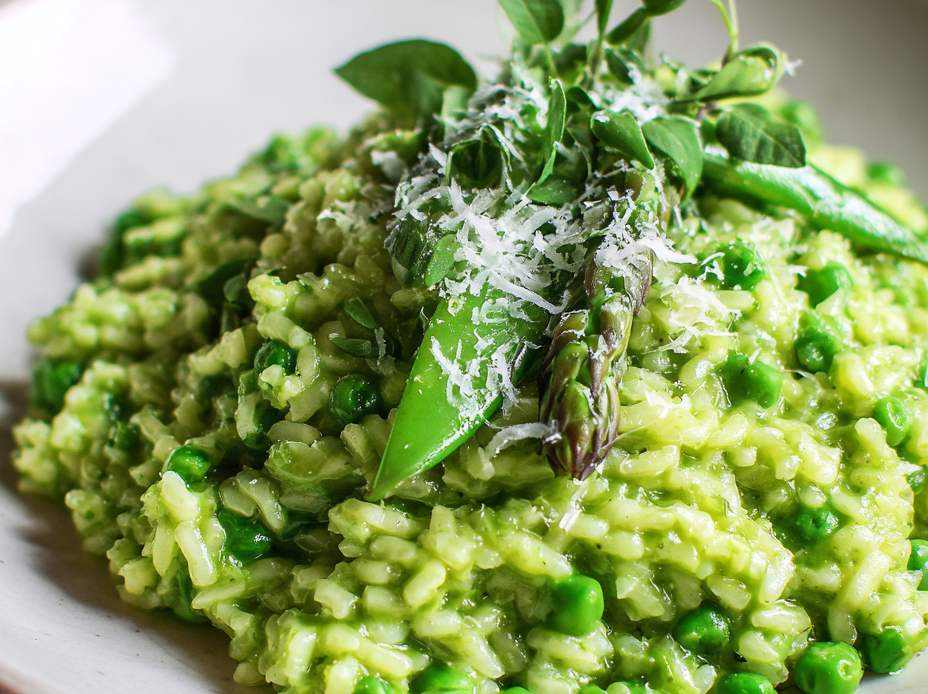
Green pea risotto might seem like a simple springtime dish, but I find its brightness can lift even the dreariest winter day. There’s something about that fresh, almost garden-fresh burst of sweetness that makes each spoonful feel like a little moment of sunshine. It’s honest, no fuss, and almost effortless—yet every time I make it, it feels like a small victory in the kitchen.
I love how the peas turn a vivid green, almost neon in the pan, and how they soften just enough to release their sweet aroma without losing their pop. It’s a dish that celebrates the fleeting beauty of seasonal vegetables, turning humble ingredients into something vibrant and comforting at the same time. Plus, it’s quick to throw together, which makes it perfect for those nights when I want something nourishing but don’t want to fuss.
This risotto is a reminder that sometimes, the simplest ingredients—peas, Parmesan, a good broth—come together to create something truly memorable. It’s a dish I keep coming back to, especially when I need a little reminder of spring’s promise, even if it’s still cold outside.
Focusing on the vibrant, almost garden-fresh flavor of green peas, this risotto highlights their natural sweetness and bright color, turning a simple dish into a celebration of spring’s fleeting moments, even in the heart of winter.
The story behind this recipe
- I first made this risotto on a rainy spring afternoon, craving something bright and fresh that could lift the gloom. The vibrant green peas caught my eye at the market, and I thought, why not turn them into a creamy, cheesy dish? It’s become my go-to for those days when I need a reminder that flavor can come from simplicity.
- There’s a memory of my grandmother’s garden, where peas grew wild and sweet, almost bursting out of their pods. I’d spend hours shelling them, the smell of fresh green filling the air. This dish is my way of capturing that fleeting burst of summer, even if it’s still chilly outside.
- heading: The story behind this recipe
Ingredient breakdown: key components
- Green peas: I love the bright, almost neon color they turn when cooked—freshness in every bite. If they’re a bit starchy, blanch and shock them quickly to keep that lively hue.
- Arborio rice: I choose this for that perfect creamy bite. To tweak, try Carnaroli if you want slightly firmer texture, but don’t skip the stir for the creaminess.
- Parmesan: I prefer a sharp, aged Parmesan for depth. For a nuttier flavor, toss in a little Pecorino Romano, but keep the Parmesan for that salty punch.
- Vegetable broth: I use homemade when I can, but a good-quality store-bought works. For extra flavor, simmer with leek tops or herbs before adding to the rice.
- Olive oil & butter: I keep it simple, just a splash of good extra virgin olive oil and a knob of butter. If you want a richer risotto, add a little more butter at the end for gloss and depth.
- Lemon zest (optional): I love a hint of lemon to brighten the dish, but use it sparingly. Skip if you prefer a more subdued, earthy flavor—pears or basil can also complement nicely.
Spotlight on key ingredients
Green peas:
- I love the bright, almost neon color they turn when cooked—freshness in every bite. If they’re a bit starchy, blanch and shock them quickly to keep that lively hue.
- Parmesan: I prefer a sharp, aged Parmesan for depth. For a nuttier flavor, toss in a little Pecorino Romano, but keep the Parmesan for that salty punch.
Rice and broth:
- Arborio rice: I choose this for that perfect creamy bite. To tweak, try Carnaroli if you want slightly firmer texture, but don’t skip the stir for the creaminess.
- Vegetable broth: I use homemade when I can, but a good-quality store-bought works. For extra flavor, simmer with leek tops or herbs before adding to the rice.
Notes for ingredient swaps
- Dairy-Free: Swap Parmesan for nutritional yeast or a dairy-free cheese. It won’t have that salty punch, but it adds a cheesy umami. Keep in mind, the flavor will be milder and slightly different in texture.
- Vegan: Use vegetable broth and skip the cheese or replace with a vegan cheese that melts well. You’ll lose some creaminess, so consider stirring in a splash of coconut milk at the end.
- Fresh Peas: Frozen peas work just fine—just add a minute or two longer to cook through. They’ll still be sweet and vibrant, just a touch less crisp.
- Rice Type: Carnaroli or Vialone Nano are good substitutes for Arborio. They’re a bit firmer, which can change the overall creaminess but still yield great texture.
- Herbs: Fresh mint or basil can brighten the dish. Add near the end for a fresh, aromatic lift, especially if you want a more summery vibe.
- Broth: Store-bought vegetable broth works perfectly, but homemade broth adds depth. If you skip the homemade, simmer a few herbs or veggie scraps to boost flavor before using.
Equipment & Tools
- Heavy-bottomed pan: Ensures even heat for proper rice cooking.
- Wooden spoon: Gentle stirring to prevent rice from sticking.
- Ladle: To add hot broth gradually.
Step-by-step guide to green pea risotto
- Equipment & Tools: Gather a heavy-bottomed pan (for even heat), a wooden spoon (for gentle stirring), and a ladle (for broth addition).
- Start by heating 1 liter (4 cups) of vegetable broth in a pot until simmering, keep warm on low heat.
- In your pan, heat 2 tbsp olive oil over medium heat (~160°C / 320°F). Add 1 small finely chopped onion and cook until translucent, about 3-4 minutes. (a) The onion should be soft and fragrant, not browned.
- Stir in 200g (1 cup) Arborio rice. Toast for about 2 minutes, stirring constantly, until edges turn translucent and lightly golden.
- Pour in a splash of white wine (~50ml), stirring until mostly evaporated. (b) The rice should shimmer and smell slightly alky, not burn.
- Begin adding warm broth, about 1/2 cup at a time, stirring constantly. Wait until liquid is mostly absorbed before adding more. (c) The rice should be creamy, tender but with a slight bite, after about 20 minutes.
- Halfway through, add 150g (1 cup) of fresh green peas. Stir gently to distribute and let them cook for about 3-4 minutes, brightening the color.
- Continue adding broth, stirring, until rice is just tender and the mixture is creamy. Turn off heat and fold in 50g (1/2 cup) grated Parmesan. Stir until melted and glossy.
- Add a small knob of butter (optional) and a pinch of lemon zest for brightness. Adjust seasoning with salt and pepper.
- Rest the risotto for 2 minutes off heat. Then, serve immediately with extra Parmesan if desired. (d) It should be luscious, with a slight jiggle in the center of the bowl.
Serve immediately, garnished with extra Parmesan and a drizzle of olive oil. Rest for a minute before plating to let flavors meld; it should be warm and luscious, not gloopy.
How to Know It’s Done
- The rice is tender but still slightly firm (al dente).
- The risotto is creamy and coats the back of a spoon.
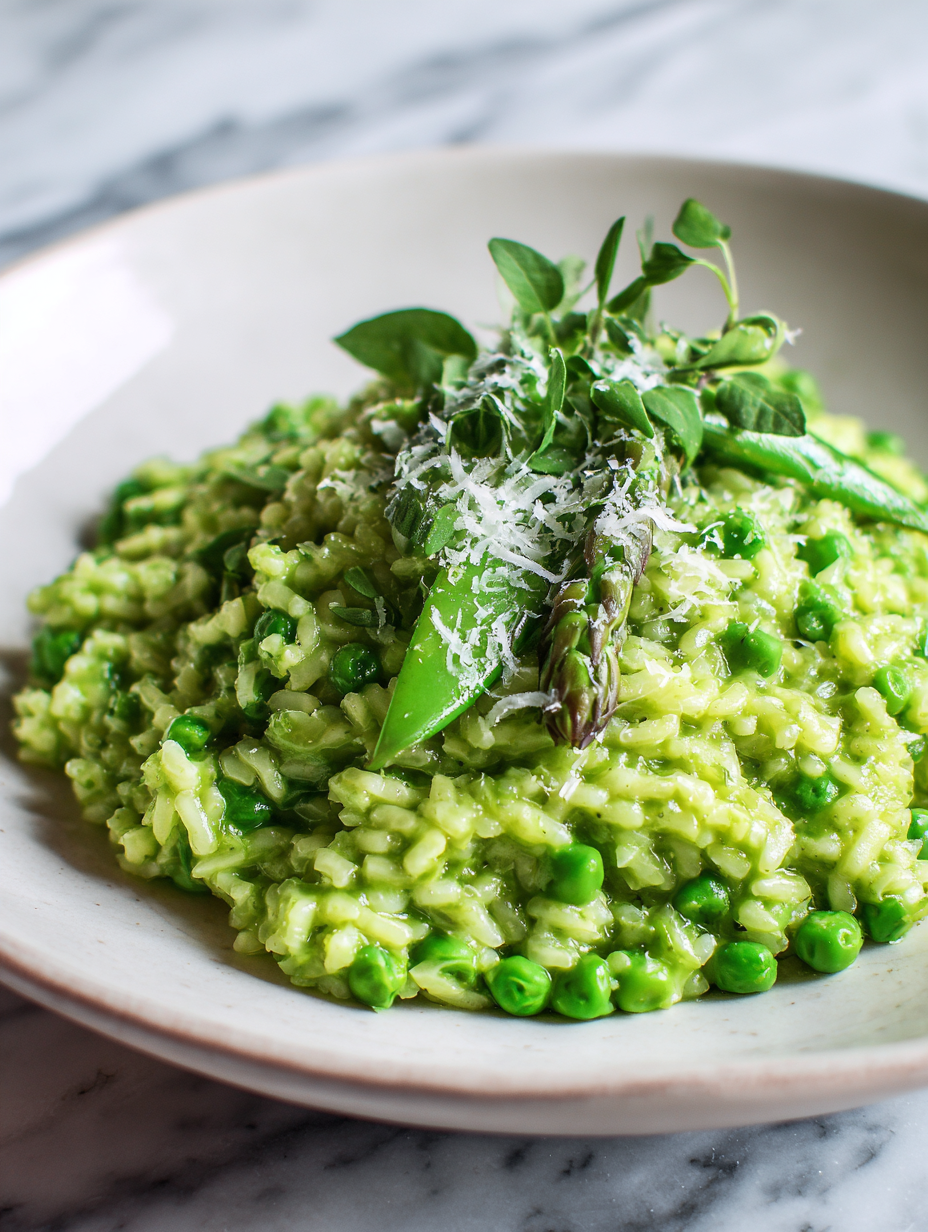
- Peas are vibrant green and bright in flavor.
Green Pea Risotto
Ingredients
Equipment
Method
- Begin by heating the vegetable broth in a saucepan until it's just simmering, then reduce to low heat to keep warm throughout cooking.
- In a large heavy-bottomed pan, warm the olive oil over medium heat. Add the finely chopped onion and cook, stirring often, until it becomes translucent and fragrant—about 3-4 minutes.
- Add the Arborio rice to the pan and stir constantly, allowing the edges to turn translucent and the rice to toast lightly—about 2 minutes. This helps release the starch for creaminess.
- Pour in the white wine and stir until it’s mostly absorbed, which should take about 2 minutes. You’ll notice the rice shimmering and smelling slightly alky.
- Begin adding the warm broth, one ladleful (about 1/2 cup) at a time, stirring constantly. Wait until most of the liquid is absorbed before adding more, maintaining a gentle simmer.
- When the rice has absorbed about half the broth, stir in the green peas. Continue adding broth and stirring, allowing the peas to soften and release their sweet aroma—about 3-4 minutes.
- Keep adding broth and stirring until the rice is tender but still slightly al dente, with a creamy texture—about 20 minutes total. The risotto should be luscious and coat the back of a spoon.
- Turn off the heat and gently fold in the grated Parmesan cheese, stirring until it melts into the risotto. Add the knob of butter and lemon zest for extra richness and brightness, stirring until well combined.
- Let the risotto rest for 2 minutes off the heat to allow flavors to meld, then give it a final stir. The dish should be glossy, vibrant green from the peas, and ready to serve immediately.
Pro tips for perfect green pea risotto
- Brighten with fresh peas: Use bright green, freshly shelled peas for vibrant color and sweetness, blanch briefly to keep their pop.
- Stir constantly: Maintain steady, gentle stirring to release rice starch and achieve that creamy, velvety texture.
- Add broth gradually: Pour in warm broth slowly, about half a cup at a time, to control absorption and prevent mushiness.
- Finish with cheese: Fold in freshly grated Parmesan off the heat for maximum flavor and a glossy finish.
- Taste as you go: Adjust seasoning at the end—salty, cheesy, and a hint of lemon zest can elevate the dish instantly.
- Use high-quality ingredients: Good broth and aged Parmesan make a noticeable difference in flavor and depth.
- Serve immediately: Risotto waits for no one—plate it right away while it’s warm and luscious, with a slight jiggle in the center.
Common mistakes and how to fix them
- FORGOT to taste for seasoning → Always adjust salt and pepper after adding cheese.
- DUMPED all broth at once → Add broth gradually for perfect creaminess and rice doneness.
- OVER-TORCHED the rice → Keep heat moderate; rice should be tender but not mushy or burnt.
- SKIPPED resting time → Let risotto sit off heat for 2 minutes for better flavor melding.
Quick fixes and pantry swaps
- IF the risotto turns gluey, splash in hot broth and stir vigorously to loosen texture.
- WHEN peas look dull, quick-blanch and shock for vibrant color and sweet crunch.
- SPLASH extra lemon juice if the dish feels flat or dull in flavor after stirring in cheese.
- PATCH over-salted risotto with a small dollop of butter or a splash of milk for smoothness.
- SHIELD the pan from direct heat if rice starts to brown or scorch, stir constantly for even cooking.
Prep, store, and reheat tips
- Prep the broth and measure rice and peas ahead—store separately in airtight containers for up to 24 hours in the fridge.
- Blanch peas in boiling water for 1-2 minutes, then shock in ice water; drain and keep in a sealed container for up to 1 day.
- Refrigerate leftover risotto in an airtight container for up to 2 days; the texture will be creamier and slightly thicker upon reheating.
- Reheat gently in a skillet or microwave, adding a splash of warm broth or water; stir until heated through and creamy, about 2-3 minutes.
- The flavors mellow slightly after sitting, but the peas retain their vibrant sweetness, and the Parmesan still provides that salty punch.
Top questions about green pea risotto
1. Can I use frozen peas instead of fresh?
Fresh peas give a brighter, sweeter flavor and a pop in every bite. Frozen peas work well, just add a minute or two longer during cooking.
2. Should I thaw frozen peas before adding?
Yes, but cook them a little longer to ensure they’re tender and retain their vibrant color. Blanch briefly before adding to the risotto.
3. Can I make this vegan or dairy-free?
Parmesan adds a salty, umami richness and creamy texture. For a dairy-free version, nutritional yeast can mimic some of that cheesy depth.
4. What broth should I use for best flavor?
Use a good quality vegetable broth, ideally homemade or simmered with herbs for extra flavor. It’s the backbone of the risotto’s depth.
5. How do I know when the risotto is done?
Add broth gradually, about half a cup at a time, stirring constantly. The rice should be creamy and tender, but still slightly firm, after about 20 minutes.
6. Any tips for stirring the risotto?
Stir constantly to release rice starch, which creates that luscious, velvety texture. Keep heat moderate to prevent burning or sticking.
7. When should I add the cheese?
Finish with cheese off the heat, folding in Parmesan for maximum creaminess and flavor. Rest for a couple of minutes before serving.
8. Can I reheat leftovers?
Serve immediately while warm and creamy. If reheating, stir in a splash of broth or water and warm gently until silky.
9. What if the rice gets mushy?
Overcooking can make the rice mushy. Keep an eye on the texture and stop adding broth once the rice is al dente, with a slight jiggle.
10. How do I keep peas vibrant?
Use bright green, fresh peas for the best flavor and color. If they’re dull or starchy, blanch and shock to refresh their vibrancy.
This green pea risotto with Parmesan feels like a snapshot of spring, even in the dead of winter. Its bright flavor and creamy texture bring a little lightness to the table, reminding me that good ingredients and honest cooking never go out of style.
Making this dish is a quiet act of celebration—something about the vibrant green and the gentle stir of rice makes me slow down and appreciate the simple pleasures. It’s not fancy, but it’s honest, and sometimes that’s exactly what I need.
Hi, I’m Madison Lane, the cook, recipe creator, and heart behind this kitchen. Food has been part of my life for as long as I can remember. Some of my earliest memories are of standing beside my dad while he cooked, watching him move comfortably around the kitchen, tasting sauces, and explaining why patience mattered just as much as seasoning.
