
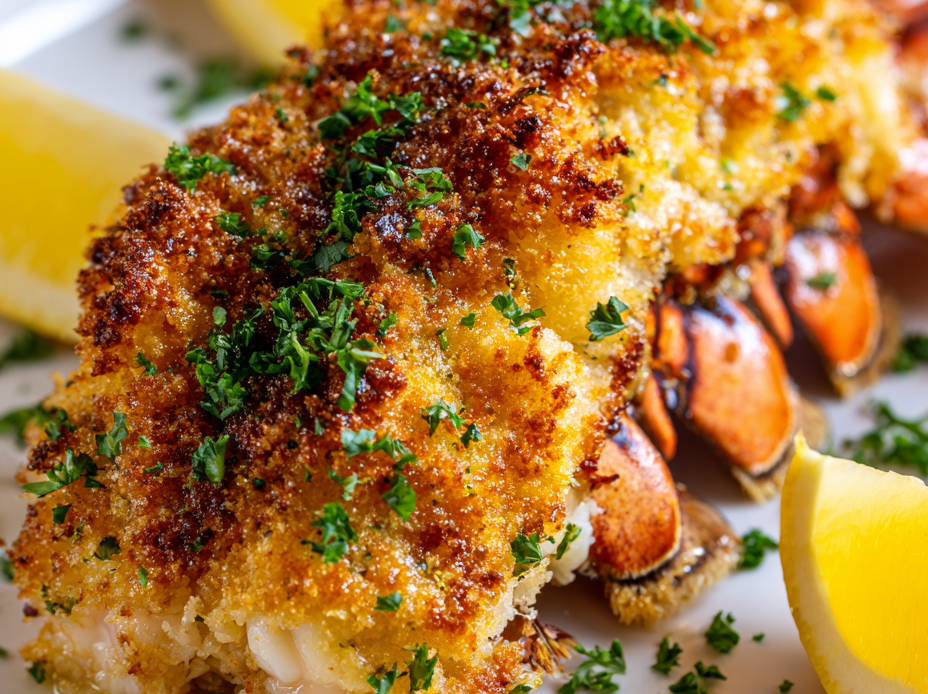
This Parmesan Crusted Lobster Tail is my twist on a seafood classic, blending the rich, buttery meat with a surprisingly sharp, nutty crust. It’s one of those dishes that feels fancy but is surprisingly straightforward to pull together, especially if you’re looking to impress without fussing too much in the kitchen.
I love how the Parmesan crust crackles slightly when it hits the hot pan, giving way to tender, juicy lobster underneath. It’s a contrast I crave—something crispy and savory against the melt-in-your-mouth sweetness of lobster. Honestly, once you try this combo, regular boiled lobster feels pretty dull by comparison.
Focusing on the contrast between the rich, buttery lobster meat and the sharp, nutty Parmesan crust, highlighting how this unexpected pairing elevates a classic seafood dish into something decadent yet approachable.
The story behind this recipe
- This dish was born out of a lazy Sunday craving for something decadent yet doable. I wanted to elevate lobster without fussing over complicated sauces or long prep. The idea of a crispy Parmesan crust just clicked one afternoon when I was experimenting with different cheese toppings for seafood.
- I remember the first time I tried this—standing in my kitchen, the smell of melting Parmesan filling the air, crackling as it hit hot oil. The moment I cut into that crust and saw the juicy lobster underneath, I knew I’d found a new favorite. It’s a reminder that simple ingredients, combined thoughtfully, can turn a special occasion into an everyday pleasure.
- heading: ‘The inspiration behind this dish’
Key ingredients and tips
- Lobster tail: I love the firm, slightly sweet meat, but be careful not to overcook it—jiggly and opaque is perfect. Swap for scallops if you want a milder, quicker bite.
- Parmesan cheese: The sharp, nutty aroma of freshly grated Parmesan is irreplaceable. Pre-grate it to avoid clumps, but feel free to try Pecorino for a saltier kick.
- Breadcrumbs: I prefer panko for extra crunch, but regular unseasoned breadcrumbs work well if you toast them first for a richer flavor.
- Butter: I use unsalted butter for control over salt, but clarified butter adds a smoky note that pairs beautifully with lobster. Watch for bubbling and a golden hue.
- Garlic: Minced fresh garlic gives a punch of aroma and depth. If you’re sensitive, use half; for more flavor, toss in a pinch of red pepper flakes for heat.
- Lemon zest and juice: Brightens everything up with a citrusy zing. Don’t skip the zest—it’s the secret to that fresh, fragrant burst when you bite in.
- Herbs (parsley or thyme): I sprinkle chopped parsley for color and freshness, but thyme adds an earthy note reminiscent of coastal summers. Use sparingly to avoid overpowering.
Spotlight on key ingredients
Parmesan cheese:
- I love how it melts and crackles, releasing a sharp, nutty aroma. It creates that irresistible golden crust.
- Lobster tail: The firm, slightly sweet meat responds beautifully to quick, high-heat cooking, staying juicy and tender with a slight jiggle.
Lobster tail:
- The firm, slightly sweet meat responds beautifully to quick, high-heat cooking, staying juicy and tender with a slight jiggle.
- Parmesan cheese: I love how it melts and crackles, releasing a sharp, nutty aroma. It creates that irresistible golden crust.
Notes for ingredient swaps
- Dairy-Free: Swap Parmesan for a nutty nutritional yeast—less sharp, but still savory and cheesy in flavor.
- Low-Sodium: Use reduced-salt Parmesan or skip added salt in the crust—your palate will notice the difference.
- Gluten-Free: Replace panko with crushed gluten-free crackers or almond flour—crunchy texture might vary slightly.
- Vegan: Use plant-based cheese shreds or grated cashew cheese—savor the umami without dairy.
- Smoky Flavor: Add a pinch of smoked paprika to the crust—enhances depth with a subtle smoky aroma.
- Herb Variations: Substitute parsley with chopped basil or chives—introduces fresh, vibrant notes.
- Lemon Zest: For a more intense citrus punch, add extra lemon zest or a splash of lemon oil—brightens every bite.
Equipment & Tools
- Kitchen shears: To cut the lobster shells cleanly and safely.
- Baking sheet: To hold the lobster tails in the oven.
- Pastry brush: To apply melted butter evenly.
- Small bowl: To mix the Parmesan crust ingredients.
- Parmesan grater: To freshly grate cheese for maximum flavor.
Step-by-step guide to Parmesan crusting
- Preheat your oven to 200°C (400°F). Get a baking sheet ready, lined with parchment or a silicone mat. Set aside your lobster tails at room temp for about 15 minutes to promote even cooking.
- Using kitchen shears, carefully cut the top of each lobster shell lengthwise, from the tail tip to just before the fin. Gently lift the shell, exposing the meat, and loosen it slightly without detaching.
- Pat the lobster meat dry with paper towels. Brush the exposed meat lightly with melted butter—about 1 teaspoon per tail—then season with a pinch of salt and pepper.
- In a small bowl, mix grated Parmesan, panko breadcrumbs, minced garlic, and chopped herbs. Spoon this mixture generously over the lobster meat, pressing it lightly to adhere.
- Place the lobster tails on the prepared baking sheet. Bake in the preheated oven for 12-15 minutes, or until the crust is golden and crispy, and the lobster meat is opaque and firm to the touch.
- During baking, the cheese crust should crackle slightly and turn a rich golden-brown. Keep an eye out—if the crust gets too dark early, loosely tent with foil.
- Remove from oven and let rest for 2 minutes. Drizzle with a squeeze of fresh lemon juice for brightness. Serve immediately, garnished with extra herbs if desired.
Let the lobster tails rest for 2 minutes off the oven. Finish with a squeeze of lemon and a sprinkle of fresh herbs. Serve hot on a platter, maybe with some extra lemon wedges on the side.
How to Know It’s Done
- Crust is golden-brown and crisp when ready.
- Lobster meat is opaque and firm, not translucent or rubbery.
- Internal temperature reaches about 60°C (140°F) for safe, tender meat.
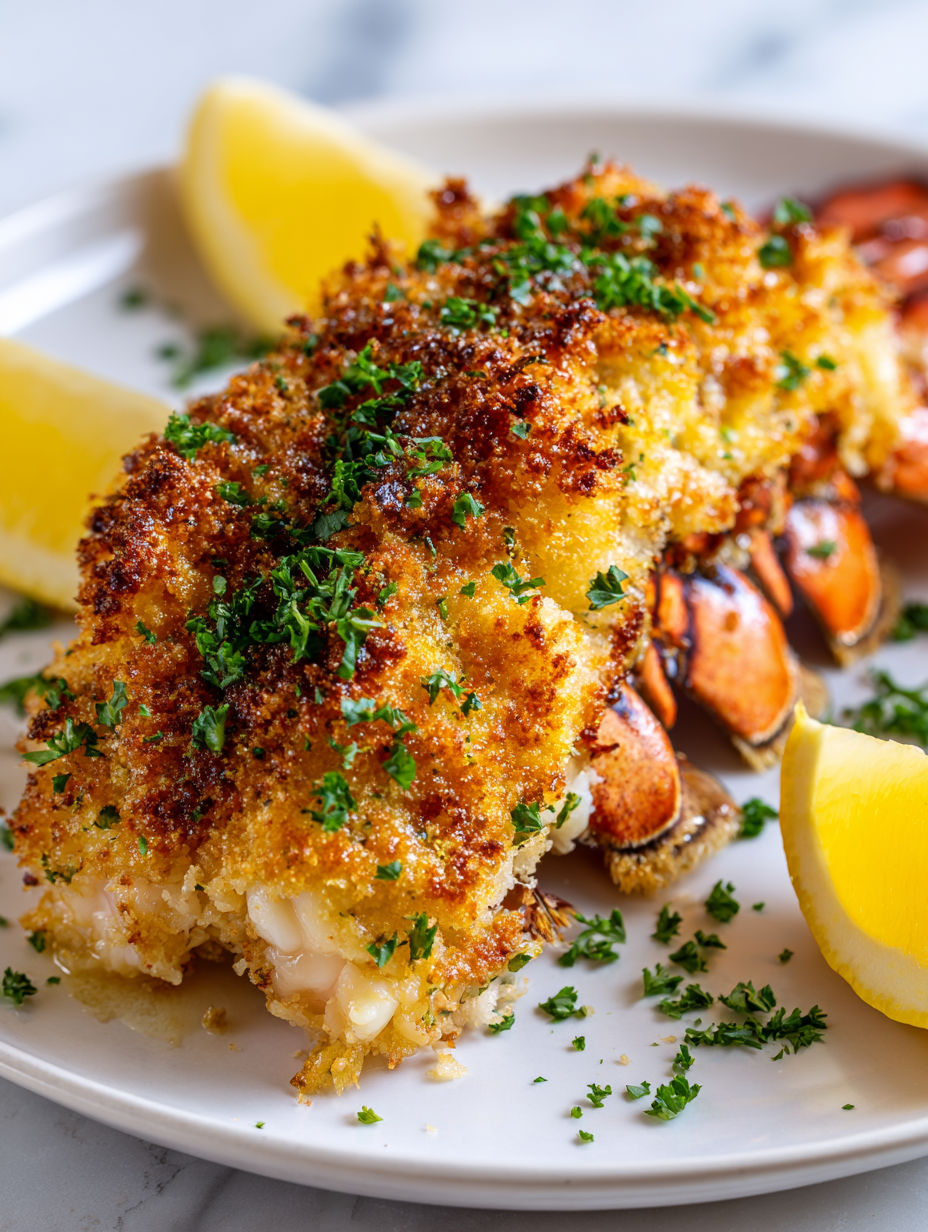
Parmesan Crusted Lobster Tail
Ingredients
Equipment
Method
- Preheat your oven to 400°F (200°C). Line a baking sheet with parchment paper and set aside. Carefully cut the top of each lobster shell lengthwise using kitchen shears, from the tail tip to just before the fin, then gently lift the shell to expose the meat. Loosen the meat slightly without detaching it from the shell.
- Pat the lobster meat dry with paper towels. Brush the exposed meat lightly with melted butter, then season with a pinch of salt and pepper. This helps the crust stick and enhances flavor.
- In a small bowl, combine the grated Parmesan, panko breadcrumbs, minced garlic, chopped herbs, and lemon zest. Mix well until evenly incorporated. This mixture will form your crispy crust.
- Spoon the Parmesan breadcrumb mixture over the lobster meat, pressing gently to help it adhere and form a thick, even crust. Make sure to cover the exposed meat generously for maximum crunch and flavor.
- Place the prepared lobster tails on the lined baking sheet, crust side up. Bake in the preheated oven for 12-15 minutes, until the crust is golden brown and crispy, and the lobster meat is opaque and firm to the touch. You might hear a slight crackle as the crust bakes.
- Once baked, remove from the oven. Squeeze fresh lemon juice over the lobster and sprinkle with extra herbs if desired. Let rest for 2 minutes to allow juices to settle.
- Serve immediately while the crust is crispy and the lobster is juicy. Enjoy the perfect contrast of textures and flavors in every bite.
Pro tips for perfect crust
- Bolded mini-head: Use fresh Parmesan—grated at the last moment for maximum flavor and melt.
- Bolded mini-head: Press the crust mixture firmly onto the lobster—ensures it stays crispy and adheres during baking.
- Bolded mini-head: Keep an eye on the oven—crust can go from golden to burnt quickly, tent if needed.
- Bolded mini-head: For even crust, place lobster tails on a wire rack set inside the baking sheet—air circulates better.
- Bolded mini-head: Broil for the last 1-2 minutes if you want extra crispiness—watch like a hawk to prevent burning.
- Bolded mini-head: Rest the lobster briefly after baking—this helps juices redistribute and keeps it tender.
Common mistakes and how to fix them
- FORGOT to preheat oven → Always preheat to ensure even crust browning.
- DUMPED lobster shells in the trash → Save shells for stock or discard carefully after cooking.
- OVER-TORCHED crust → Tent with foil if crust darkens too quickly.
- MISSED resting time → Rest lobster for 2 minutes to let flavors settle and juices redistribute.
Quick fixes and pantry swaps
- When crust is too pale → Splash a little lemon juice on the crust for a shimmer and extra brightness.
- If cheese isn’t melting evenly → Patch with a sprinkle of grated Parmesan and broil for 30 seconds.
- Overcooked lobster → Shield with foil and serve immediately to halt cooking and retain juiciness.
- Dumped crust mixture on the baking sheet → Rescue with a gentle press to reattach before baking.
- When pantry lacks panko → Swap with crushed Ritz crackers for crunch and buttery flavor.
Prep, store, and reheat tips
- You can prepare the Parmesan crust mixture a day ahead. Store it in an airtight container in the fridge, where it stays fresh and crumbly until needed.
- Raw lobster tails can be kept in the fridge for up to 24 hours—keep them covered with plastic wrap to prevent odor absorption. For longer storage, freeze for up to 2 months, wrapped tightly in plastic and foil.
- Cooked lobster tails are best enjoyed fresh, but if necessary, reheat gently in a 150°C (300°F) oven for about 10 minutes. The crust may soften slightly, so serve promptly for maximum crispness and aroma.
- Refrigerated cooked lobster will lose some of its initial juiciness and crispness. Expect a milder flavor and slightly softer texture upon reheating, but still delicious with a fresh squeeze of lemon.
Top questions about Parmesan Crusted Lobster Tail
1. How do I choose the best lobster tail?
Look for lobster tails that are firm, with shells that are shiny and not cracked. Freshness is key for sweet, tender meat.
2. How do I make the crust crispy and golden?
To get that crispy crust, make sure your cheese mixture is pressed firmly onto the lobster before baking. A gentle bake at high heat is ideal.
3. What’s the perfect baking time and temperature?
Bake at 400°F (200°C) for about 12-15 minutes. The lobster should be opaque and firm, with a crackling crust.
4. Can I use different cheese?
Use freshly grated Parmesan for the best flavor and meltability. Store-bought pre-grated can be less fragrant and more clumpy.
5. Can I make this gluten-free?
Yes, you can substitute panko with crushed gluten-free crackers or almond flour for a different crunch and flavor profile.
6. How do I add brightness to the dish?
Add a squeeze of lemon right after baking to brighten up the rich flavors. A little zest enhances the citrus aroma.
7. What if the crust burns?
Keep an eye on the crust during baking. If it darkens too quickly, tent loosely with foil to prevent burning.
8. Should I let it rest before serving?
Rest the lobster for about 2 minutes after baking. This helps juices settle, making it more tender when served.
9. How do I reheat lobster without losing flavor?
Reheat leftovers gently in a low oven or warm skillet. The crust may soften, but the lobster will stay juicy if not overcooked.
10. How can I make the crust extra crispy?
For an extra crunch, broil the crust for 1-2 minutes at the end. Watch closely to avoid over-browning.
This Parmesan Crusted Lobster Tail is a reminder that simple ingredients can create something unexpectedly luxurious. The crackling cheese, combined with tender, juicy lobster, makes for a dish that feels indulgent but is surprisingly straightforward to prepare.
Sharing this dish feels like a small act of celebration—perfect for a special night or when you just need a break from the usual. It’s a dish that turns an ordinary seafood meal into a memorable moment, with all its crispy, savory charm.

Hi, I’m Madison Lane, the cook, recipe creator, and heart behind this kitchen. Food has been part of my life for as long as I can remember. Some of my earliest memories are of standing beside my dad while he cooked, watching him move comfortably around the kitchen, tasting sauces, and explaining why patience mattered just as much as seasoning.
