
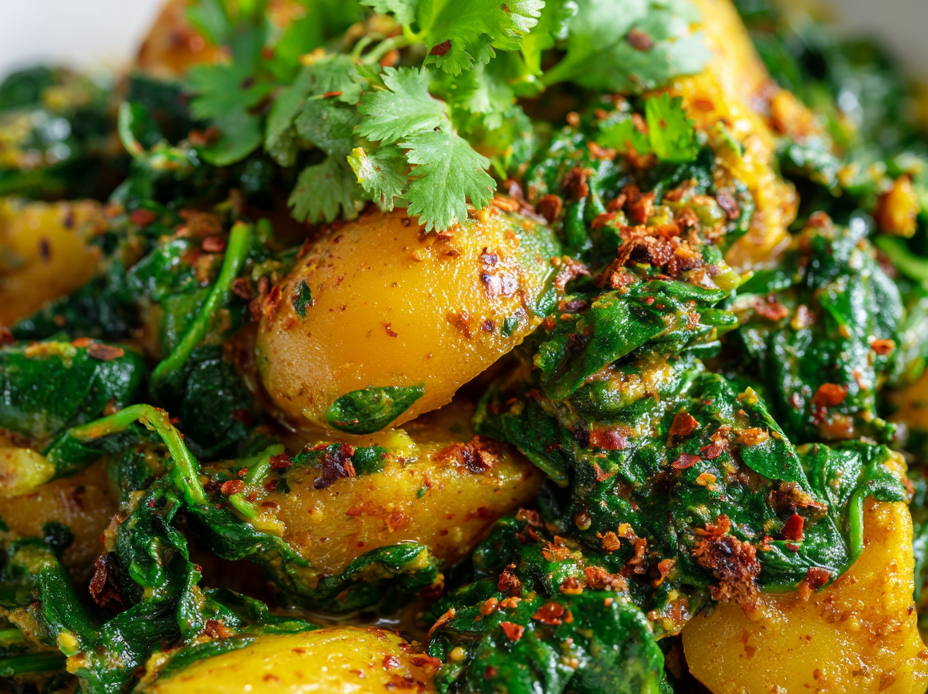
This spinach potato curry is my go-to when I need something quick, filling, and full of flavor without a fuss. It’s the kind of dish that feels like a hug after a long day, especially when you’re craving green stuff but don’t want to spend ages in the kitchen. I love how the earthy potatoes and tender spinach come together in a rich, mildly spiced sauce that’s perfect with rice or flatbread.
What makes this recipe stand out is its simplicity. You probably have everything you need right now—potatoes, spinach, basic spices. It’s a dish that respects your time but still delivers comfort and warmth. I often throw it together in under 30 minutes, making it a weekly staple during busy weeknights, when a quick nourishing meal is all you really want.
Focusing on how this humble spinach potato curry can be a quick, nourishing comfort for busy weeknights, emphasizing the balance of simplicity and flavor that keeps it in my weekly rotation.
The story behind this recipe
- This dish actually started from a lazy Sunday afternoon when I found a bunch of wilted spinach in the fridge and some tired potatoes sitting in the pantry. Instead of tossing them, I threw together what I had and ended up with something unexpectedly bright and comforting. That quick improvisation stuck with me because it’s so flexible, forgiving, and honest—just simple ingredients, honest flavors.
- Every time I make it, I remember those afternoons when a quick, humble meal could turn a chaotic day into something nourishing. It’s become my fallback for when I want something warm without fuss, especially on nights when I don’t want to think too hard about dinner. Honestly, it’s like a little reminder that good food doesn’t have to be complicated or fancy—it just needs to be real.
- heading: The story behind this recipe
Ingredient breakdown: key components
- Potatoes: I prefer starchy potatoes for creaminess, but if you want a lighter texture, go for waxy ones. They hold shape better. When cooked just right, they offer a tender, comforting bite with every scoop.
- Spinach: Fresh spinach adds a vibrant, slightly bitter contrast that balances the spices. If you’re short on time, frozen spinach works—just squeeze out excess water and add towards the end for that bright, wilted look.
- Onions & Garlic: These form the savory foundation. I sauté until they’re golden and fragrant—about 5 minutes. If they burn, the curry turns bitter, so keep the heat moderate and stir often.
- Spices: Cumin, coriander, turmeric—these are my backbone. Toast them lightly in oil first for a deeper, nutty aroma. Too much heat and they scorch—toast until fragrant, then add liquids promptly.
- Tomatoes: Fresh or canned, they give the curry a tangy richness. I prefer crushed canned tomatoes for ease. When simmering, watch for a rich, burgundy color and a smell of roasted tomato—this is your cue to move on.
- Cooking Oil: A neutral oil like vegetable or canola keeps the flavors clean. I heat it until it shimmers before adding spices—this wakes up their aroma and prevents sticking. If it smokes, turn down the heat.
- Garam Masala & Salt: Finish with a pinch of garam masala for warmth. Adjust salt at the end—remember, potatoes absorb seasoning, so taste as you go to hit that perfect savory note.
Spotlight on key ingredients
Spinach & Potatoes:
- Potatoes: I love starchy potatoes for their creamy, melt-in-your-mouth texture once cooked. They absorb flavors beautifully and add a comforting thickness to the curry. When they’re just tender and slightly flaky, you know they’re perfect.
- Spinach: Fresh spinach offers a vibrant, slightly bitter contrast that brightens the dish. It wilts quickly, turning a vivid green and releasing a fresh, earthy aroma. Frozen spinach works well—just squeeze out excess water to avoid a soggy curry.
Notes for ingredient swaps
- Dairy-Free: Coconut milk can replace cream for richness, adding a subtle sweetness and a creamy texture. If you prefer a lighter dish, skip the coconut and use a splash of water or vegetable broth.
- Potato Varieties: Russet potatoes give a fluffy, soft texture, but if you want something firmer, try Yukon Gold or red potatoes—they hold shape better and add a buttery note. Waxy potatoes are great for a chunkier feel.
- Fresh Spinach: Baby spinach is tender and quick to wilt, but mature spinach works just as well—just chop it a bit smaller. Frozen spinach is a good shortcut—thaw and squeeze out excess water first.
- Spice Mix: If you don’t have cumin or coriander, a teaspoon of curry powder can work in a pinch, though it will change the flavor profile slightly. Toast spices first for maximum aroma.
- Tomatoes: Fresh ripe tomatoes add brightness, but canned crushed or pureed tomatoes give a more consistent, rich base. Use fire-roasted for a smoky twist. In a pinch, tomato paste thinned with water works.
- Oil: Neutral oils like canola or vegetable keep the flavors clean, but if you want a richer flavor, ghee or coconut oil adds depth and aroma. Keep an eye on the heat—they burn more easily.
- Garam Masala & Salt: If you don’t have garam masala, a pinch of cinnamon and cloves can mimic some warmth. Always taste and adjust salt last—it’s key to balancing the earthiness of potatoes and spinach.
Equipment & Tools
- Large skillet or wok: For cooking all ingredients evenly and stirring comfortably.
- Wooden spoon: To stir and scrape ingredients without damaging cookware.
- Sharp knife: For peeling and chopping potatoes and aromatics.
- Cutting board: A stable surface for prepping vegetables.
Step-by-step guide to spinach potato curry
- Gather your equipment: a large skillet or wok, a wooden spoon, a sharp knife, and a cutting board. The skillet should be big enough to hold all ingredients comfortably and allow for good stirring.
- Peel and dice 3 medium-sized potatoes into 1-inch cubes. Keep them uniform for even cooking. Set aside.
- Rinse 4 cups of fresh spinach thoroughly, then roughly chop. If using frozen, thaw and squeeze out excess water. Prepare to add near the end.
- Heat 2 tablespoons of oil in the skillet over medium heat (about 160°C/320°F). When shimmering, add 1 chopped onion and sauté for 5 minutes until golden and fragrant, stirring often.
- Add 3 minced garlic cloves and 1 teaspoon of grated ginger. Cook for 1 minute until aromatic. Be careful not to burn the garlic—lower the heat if needed.
- Stir in 1 teaspoon cumin seeds, 1 teaspoon coriander powder, and ½ teaspoon turmeric. Toast for about 30 seconds until the spices release a nutty aroma and turn slightly darker. If they scorch, remove from heat and start again.
- Pour in 1 can (400g) crushed tomatoes. Stir well, scraping any bits from the bottom. Cook for 8-10 minutes on low-medium heat (about 140°C/284°F) until the sauce thickens and deepens in color, smelling rich and roasted.
- Add the diced potatoes to the sauce. Mix thoroughly, ensuring they’re coated. Cover and simmer on low heat (about 130°C/266°F) for 15-20 minutes, stirring occasionally. Check for tenderness by poking with a fork—potatoes should be soft but not falling apart.
- Once potatoes are tender, fold in the chopped spinach. Cover and cook for another 2-3 minutes until the spinach wilts and turns bright green, releasing a fresh aroma. If the curry looks too thick, add a splash of water and stir.
- Taste and adjust seasoning with salt and a pinch of garam masala if desired. Let it rest off the heat for 2 minutes, allowing flavors to meld. Serve hot with rice or flatbread, garnished with a squeeze of lemon if you like.
Let the curry sit off heat for 2 minutes. Serve hot, garnished with fresh herbs or a squeeze of lemon. Pair with rice or flatbread for a complete meal.
How to Know It’s Done
- Potatoes are fork-tender and easily pierced.
- Curry has a thick, rich sauce with a deep tomato aroma.
- Spinach is wilted and bright green, not overcooked.
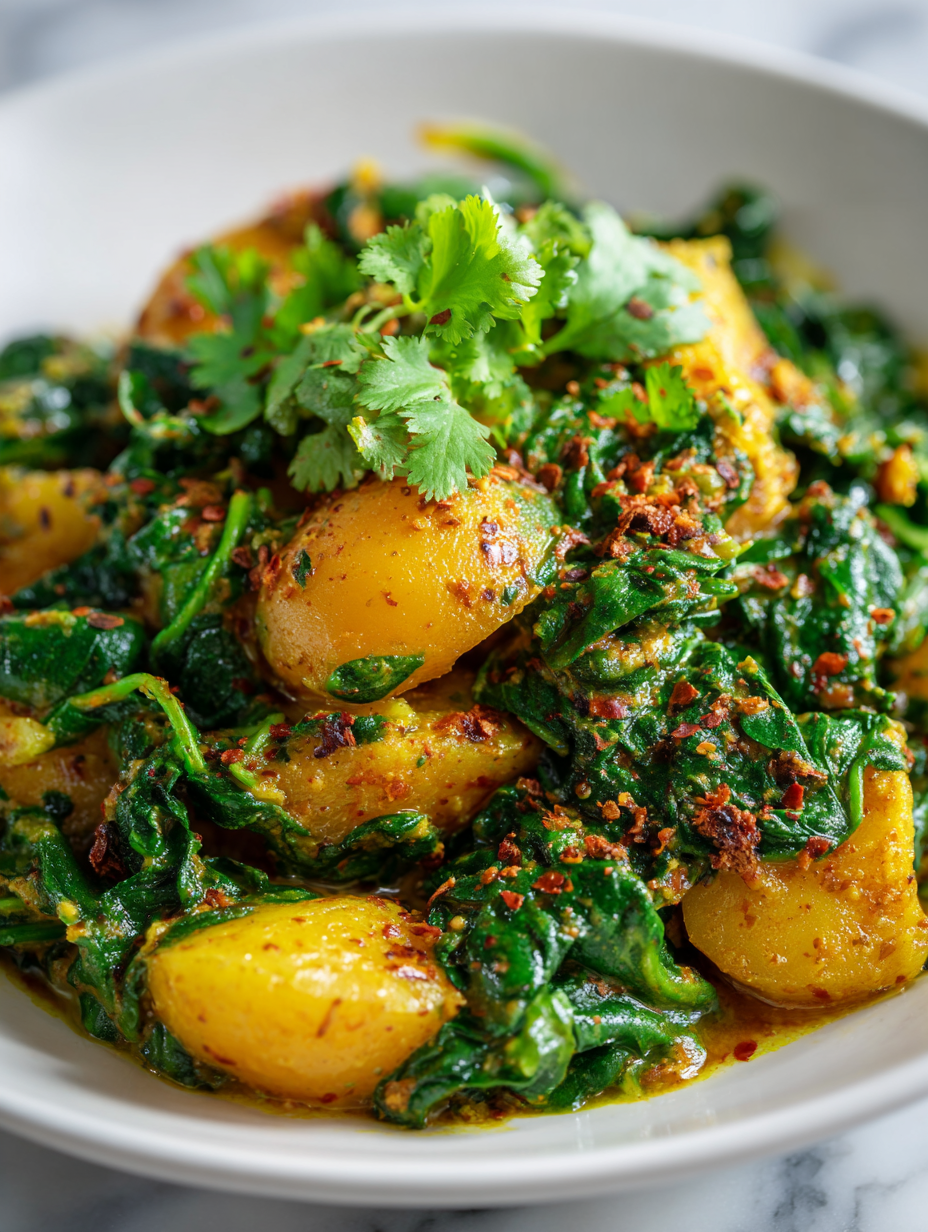
Spinach Potato Curry
Ingredients
Equipment
Method
- Peel and dice the potatoes into 1-inch cubes, keeping them uniform for even cooking. Rinse and roughly chop the spinach, or thaw and squeeze out excess water from frozen spinach.
- Heat the vegetable oil in a large skillet over medium heat until it shimmers. Add the diced onion and sauté for about 5 minutes until golden and fragrant, stirring occasionally.
- Add the minced garlic and grated ginger to the skillet. Cook for about 1 minute until aromatic, stirring constantly to prevent burning.
- Stir in the cumin seeds, coriander powder, and turmeric. Toast the spices for 30 seconds until fragrant and slightly darker, stirring gently.
- Pour in the crushed tomatoes and stir well, scraping the bottom of the pan. Let the mixture simmer gently for 8-10 minutes until it thickens and fills the kitchen with a rich, roasted aroma.
- Add the diced potatoes to the sauce, stirring to coat them evenly. Cover the skillet and simmer on low heat for 15-20 minutes, stirring occasionally, until the potatoes are tender and easily pierced with a fork.
- Fold in the chopped spinach, spreading it evenly over the curry. Cover again and cook for another 2-3 minutes until the spinach wilts to a bright green and releases a fresh aroma.
- Uncover and taste the curry, then season with salt and a pinch of garam masala if using. Let it rest off the heat for 2 minutes to allow flavors to meld.
- Serve your hearty spinach potato curry hot with rice or flatbread, garnished optionally with fresh herbs or a squeeze of lemon for extra brightness.
Pro tips for perfect curry
- Golden Onions: Sauté until they caramelize slightly for a sweet, rich base that deepens the curry’s flavor.
- Spice Toasting: Lightly toast cumin and coriander in oil until fragrant; this boosts aroma and flavor complexity.
- Tomato Simmer: Cook tomatoes until they deepen in color and smell roasted—this develops a richer, less acidic base.
- Potato Check: Test with a fork; potatoes should be tender and easily pierced but not falling apart.
- Spinach Timing: Add spinach at the end; it wilts quickly and retains bright color and fresh aroma.
- Oil Temperature: Heat oil until it shimmers before adding spices—this wakes up flavors without burning them.
- Rest Before Serving: Let the curry rest 2 minutes off heat; flavors meld and become more harmonious.
Common mistakes and how to fix them
- FORGOT to watch the spice toast; burnt spices turn bitter—lower heat immediately.
- DUMPED too much water during simmering; add a splash more if curry is too thick.
- OVER-TORCHED the garlic; it turns bitter—add garlic later if burnt.
- MISSED the potato tenderness test; cook longer if potatoes aren’t easily pierced.
Quick fixes and pantry swaps
- When spices burn, splash a little water to cool and release aroma.
- If curry is too thick, add a splash of hot water or broth, then stir well.
- Splash lemon juice when spinach turns dull for a fresh, vibrant pop.
- Patch over burnt spices quickly with a pinch of fresh spices or a dash of curry powder.
- Shield the curry from scorching by lowering heat immediately and stirring constantly.
Prep, store, and reheat tips
- Peel and chop potatoes ahead; store in water in the fridge for up to 24 hours to prevent browning and keep ready for quick cooking.
- Wash and roughly chop spinach; keep in an airtight container in the fridge for up to 2 days, use quickly for the freshest flavor.
- Prepare spice blend or toast spices in advance; store in an airtight jar. The flavors deepen over time, making your curry more fragrant.
- Cook the curry base (tomatoes, onions, spices) partially or fully ahead; cool completely, then refrigerate for up to 2 days. Reheat gently, smelling for the rich aroma before serving.
- Reheat curry in a saucepan over low-medium heat, stirring often. The flavors intensify as it warms, and the sauce thickens slightly—look for a bubbling, fragrant mixture.
Top questions about spinach potato curry
1. Can I use frozen spinach?
Yes, frozen spinach works well. Just thaw and squeeze out excess water before adding near the end to keep the curry bright and fresh.
2. What type of potatoes should I use?
Absolutely. Waxy potatoes hold shape better and give a firmer bite, while starchy potatoes make the curry creamier.
3. Can I make it dairy-free?
Yes, coconut milk adds a creamy, slightly sweet richness. It pairs beautifully with the spices, making the dish more comforting.
4. How do I toast spices properly?
Cooking the spices until fragrant is key. Toast cumin and coriander briefly in oil until they smell nutty and aromatic.
5. When should I add the spinach?
Add spinach at the very end, just a few minutes before serving, until it wilts to keep its vibrant color and fresh flavor.
6. What if my curry is too thick?
If the curry gets too thick, stir in a splash of water or broth. For a thinner sauce, simmer a bit longer with liquid added.
7. How do I prevent spices from burning?
To avoid burning spices, keep the heat moderate and stir constantly. If spices scorch, start over with fresh ones to prevent bitterness.
8. How should I reheat leftovers?
Reheat gently over low heat, stirring often. The flavors deepen, and the sauce thickens slightly, so watch for bubbling and a fragrant aroma.
9. Can I make this ahead?
You can prepare the potato and spice base in advance, store in the fridge, and finish cooking with spinach when ready to serve.
10. How do I enhance the flavor after cooking?
Yes, adding a squeeze of lemon juice or a dash of garam masala just before serving can brighten flavors and add depth.
This spinach potato curry is a reminder that simple ingredients can create something truly comforting. It’s quick to make and honest in flavor, perfect for busy nights or when you need a little nourishment fast.
In these hurried moments, a dish like this keeps me grounded—warm, familiar, and satisfying. Sometimes, all I want is something straightforward that still tastes like it’s made with care, and this recipe hits that mark every time.

Hi, I’m Madison Lane, the cook, recipe creator, and heart behind this kitchen. Food has been part of my life for as long as I can remember. Some of my earliest memories are of standing beside my dad while he cooked, watching him move comfortably around the kitchen, tasting sauces, and explaining why patience mattered just as much as seasoning.
