
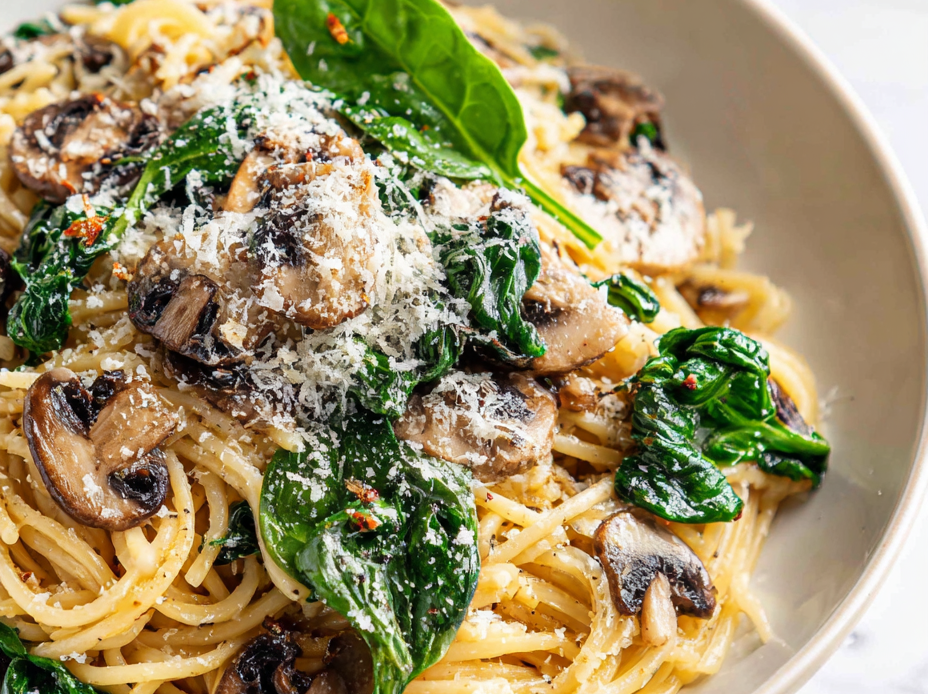
This spinach and mushroom pasta isn’t about flashy ingredients or complicated techniques. It’s about elevating humble, earthy mushrooms and fresh, leafy spinach through honest cooking. I love how these simple flavors come alive with just a little butter, garlic, and patience, turning what could be a quick weeknight dinner into something richer and more satisfying.
There’s something comforting in knowing that these ingredients, often overlooked, can shine in their own right. Mushrooms release a deep umami that’s almost smoky, while spinach adds a burst of vibrancy and nutrition. It’s a reminder that simple, good ingredients cooked with care can create real warmth on the plate.
Focusing on the overlooked beauty of the earthy, umami-rich mushroom and the vibrant, nutritious spinach, this recipe emphasizes how these humble ingredients can be elevated with simple techniques and honest flavors, transforming a basic pasta into a comforting yet sophisticated dish.
The story behind this recipe
- This recipe was born out of a rainy weekend when I needed something warm and quick but didn’t want to settle for a bland pasta. I remember the first time I added a handful of sautéed mushrooms and wilted spinach to my spaghetti — the earthy aroma and the way the greens softened just enough. It became my go-to after those long, gray days, a reminder that simple ingredients can create something soulful.
- I’ve always loved how mushrooms bring a smoky, umami depth that’s almost addictive. Spinach, with its bright, slightly bitter bite, balances that richness perfectly. It’s one of those dishes that feels like a small victory — humble ingredients, but a flavor punch that sticks with you.
- story_type
Breakdown of Key Ingredients
- Spinach: I like to use fresh, baby spinach for its tender leaves and bright flavor; wilted spinach adds a vibrant, slightly bitter note that balances richness. If you prefer less bitterness, try squeezing out excess moisture before adding it to the pan.
- Mushrooms: I favor cremini or button mushrooms—they release a smoky aroma as they cook, which deepens the sauce’s umami. For a more intense flavor, let them brown well; if they stick, a splash of wine helps loosen everything up.
- Garlic: I always use plenty of garlic, crushed and minced finely, to get that fragrant, slightly caramelized note. If you’re garlic-sensitive, add a touch later in the cooking to avoid bitterness, or use roasted garlic for sweetness.
- Pasta: I opt for a sturdy, slightly thick pasta like pappardelle or rigatoni because they hold up well to the sauce. Al dente is key—about 8 minutes in boiling salted water—so it doesn’t turn mushy when combined.
- Olive oil: I use a good fruity extra virgin olive oil for sautéing; it adds a subtle pepperiness that complements the earthy mushrooms. For a richer flavor, drizzle a little more before serving, but skip if you’re watching your oil intake.
- Lemon zest: I add a hint of lemon zest at the end for brightness—makes the dish feel fresh and lifts the earthy tones. If you prefer a milder citrus note, reduce the zest amount or omit it.
- Parmesan: I grate freshly, aiming for a nutty, salty punch that ties everything together. For a dairy-free version, nutritional yeast offers a cheesy umami, though it’s a different experience.
Spotlight on key ingredients
Spinach:
- I love fresh, young leaves for their tender texture and vibrant flavor; wilted spinach adds a slightly bitter note that balances richness. Squeeze out excess moisture to avoid soggy pasta.
- Mushrooms: I prefer cremini or button mushrooms—they release a smoky, umami aroma as they cook. Let them brown well for depth; if they stick, a splash of wine helps loosen them up.
Mushrooms:
- Their earthy, smoky aroma and meaty texture deepen the sauce. During cooking, they release juices that intensify flavor—let them sauté until deep golden for maximum umami.
- Spinach: Its bright green color wilts quickly, adding a fresh, slightly bitter contrast. Wilt over medium heat just until tender, avoiding overcooking to keep that vibrant hue.
Notes for ingredient swaps
- Dairy-Free: Swap Parmesan for nutritional yeast—adds umami without dairy, but less salty and cheesy.
- Gluten-Free: Use gluten-free pasta—tastes similar but can cook slightly differently, so watch the texture.
- Vegan: Replace Parmesan with vegan cheese or tahini—offers creaminess, but flavor is milder and less nutty.
- Oil: Substitute with avocado oil—mild flavor and high smoke point, good for sautéing without overpowering.
- Lemon: Use lime zest instead—brings a slightly different citrus brightness, more tart and sharp.
- Mushrooms: Try shiitake or oyster mushrooms—add richer, more intense earthy flavor and chewy texture.
- Spinach: Substitute with kale or Swiss chard—more robust greens, may need longer cooking to soften.
Equipment & Tools
- Large skillet: Sauté mushrooms and spinach, and combine pasta.
- Pasta pot: Cook pasta to al dente.
- Slotted spoon: Remove pasta and sautéed ingredients without excess water.
- Stirring spoon: Mix ingredients evenly and prevent sticking.
Step-by-step guide to pasta
- Gather your equipment: a large skillet (about 30cm/12in), a slotted spoon, a pasta pot, and a stirring spoon. Boil water with a generous pinch of salt in the pasta pot, bringing it to a rolling boil at 100°C (212°F).
- Start boiling your pasta first—about 8 minutes for al dente, so it’s ready just as your sauce finishes. Drain and set aside, reserving a cup of pasta water.
- While pasta cooks, heat the skillet over medium-high heat (around 180°C/355°F). Add 2 tbsp olive oil, and once shimmering, toss in 2 cups sliced mushrooms. Cook, stirring, until they are deep golden and fragrant—about 8 minutes. If mushrooms stick, splash a little wine or water to loosen them.
- Lower the heat to medium. Add 3 minced garlic cloves, cooking until fragrant—about 30 seconds. Be careful not to burn it; if garlic browns too fast, turn down the heat. The smell should turn sweet and savory.
- Toss in the spinach—about 4 cups fresh, washed. Stir until wilted—roughly 2–3 minutes. If the greens seem too wet, let them cook off a bit; if they start to burn, add a splash of reserved pasta water.
- Combine everything: add the drained pasta to the skillet. Toss to coat in the mushrooms and spinach. If the mixture feels dry, add a splash of pasta water until glossy. Cook together for 1 minute, letting the flavors meld.
- Finish with a squeeze of lemon zest, about 1 tsp, for brightness. Grate fresh Parmesan over generously—about 1/4 cup. Taste and adjust salt or pepper as needed.
- Remove from heat. Let the dish rest for 2 minutes so flavors settle. Plate with extra Parmesan and a drizzle of olive oil, if desired.
Rest the plated dish for 2 minutes to allow flavors to meld. Finish with extra Parmesan, a drizzle of olive oil, and serve warm, ensuring the aroma of garlic and lemon zest is lively.
How to Know It’s Done
- Mushrooms are deep golden and fragrant.
- Spinach is wilted but still vibrant green.
- Pasta is al dente, with a slight bite.
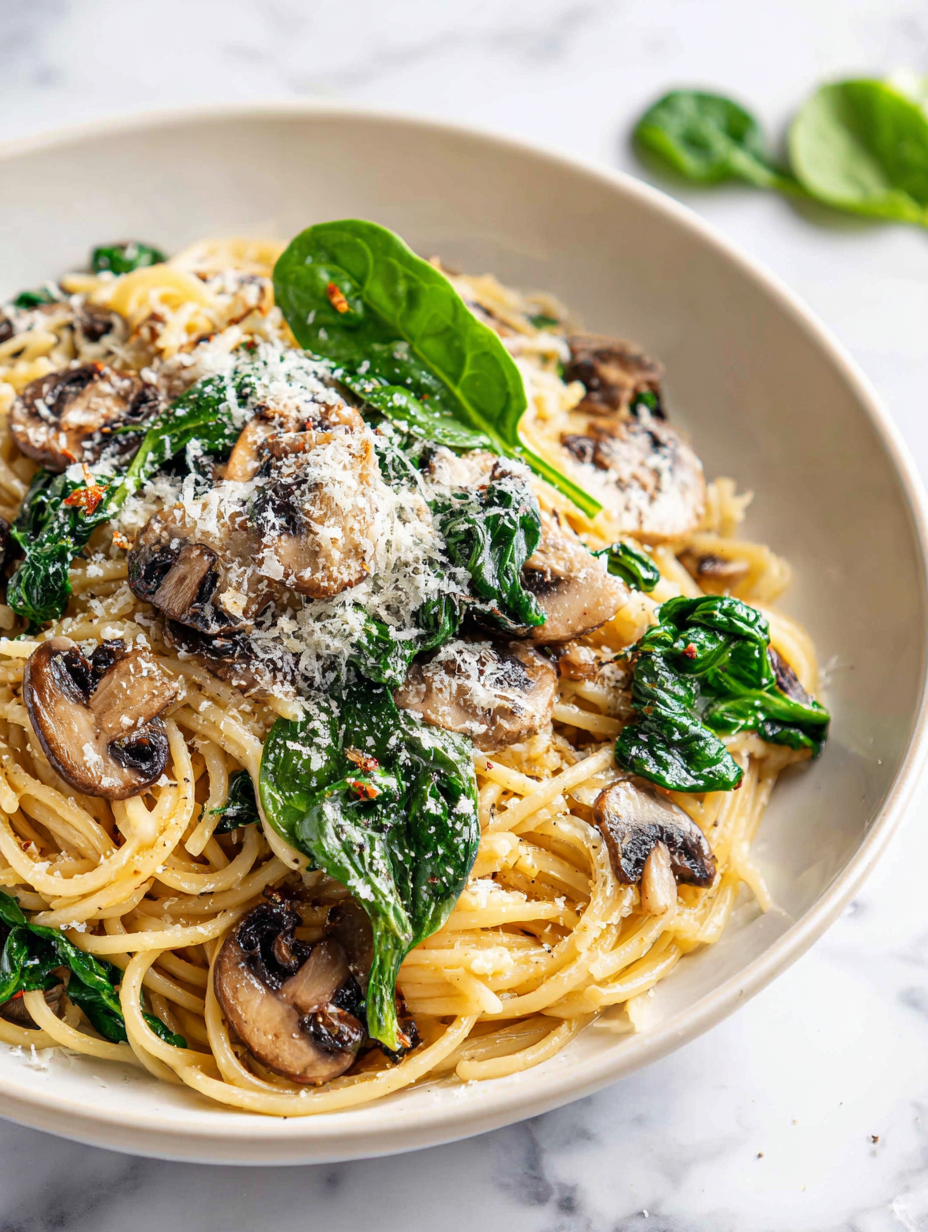
Spinach and Mushroom Pasta
Ingredients
Equipment
Method
- Bring a large pot of salted water to a rolling boil, then add your pasta and cook until al dente, about 8 minutes. Drain, reserving a cup of pasta water, and set aside.
- While the pasta cooks, heat a large skillet over medium-high heat and add 2 tablespoons of olive oil. Once shimmering, add the sliced mushrooms and sauté, stirring occasionally, until they turn deep golden brown and release a fragrant, smoky aroma—about 8 minutes.
- Add the minced garlic to the skillet with the mushrooms and cook for about 30 seconds, until fragrant and slightly caramelized, making the kitchen smell savory and inviting.
- Stir in the fresh spinach and cook, stirring frequently, until it wilts down and turns a vibrant green—about 2 to 3 minutes. If the mixture seems too wet, let it cook a little longer to evaporate excess moisture.
- Add the drained pasta to the skillet with the mushrooms and spinach. Toss everything together to coat the pasta evenly in the flavorful mixture, adding a splash of reserved pasta water if needed to loosen it up and create a glossy sauce.
- Sprinkle the grated Parmesan cheese over the pasta and add the lemon zest for a fresh, bright note. Toss again gently to distribute the flavors evenly.
- Season with salt and pepper to taste, and let the pasta rest for a minute to allow the flavors to meld and the cheese to melt into the sauce.
- Serve the pasta warm, garnished with an extra sprinkle of Parmesan and a drizzle of olive oil if desired. Enjoy the comforting aroma of earthy mushrooms, fresh greens, and bright citrus in every bite.
Notes
Pro tips for perfect pasta
- Use high heat for mushrooms to get a deep, smoky sear that enhances flavor.
- Add garlic later in the sauté to prevent bitterness and burn marks.
- Wilt spinach quickly over medium-high heat to preserve color and texture.
- Reserve a cup of pasta water; it’s your secret to a silky, cohesive sauce.
- Toss pasta directly into the skillet to absorb flavors better and prevent sticking.
- Finish with lemon zest off heat to keep that bright, fresh aroma alive.
- Grate Parmesan at the last moment for maximum nuttiness and melting quality.
Common mistakes and how to fix them
- FORGOT to add salt to pasta water → Always salt generously for flavor.
- DUMPED mushrooms in cold oil → Heat oil first, then add mushrooms for proper sear.
- OVER-TORCHED garlic → Cook garlic until fragrant, about 30 seconds; remove if it browns too fast.
- SKIPPED draining pasta water → Reserve pasta water to adjust sauce consistency.
Quick fixes and pantry swaps
- When mushrooms release excess water, splash a little wine to deepen flavor.
- If pasta sticks, toss with hot pasta water to loosen and shimmer.
- Splash lemon juice on wilted spinach for extra brightness.
- Patch overcooked garlic with a sprinkle of fresh herbs for freshness.
- Shield pan from splattering by lowering heat immediately when oil shimmers.
Prep, store, and reheat tips
- Prep your ingredients ahead: wash and dry spinach, slice mushrooms, and grate cheese the day before for quick assembly.
- Store cooked pasta in an airtight container in the fridge for up to 2 days. Reheat gently, tossing with a bit of water or oil until warmed through and slightly shimmering.
- Sautéed mushrooms and wilted spinach can be made up to 24 hours in advance. Keep in separate containers in the fridge, and reheat in a skillet over medium heat until fragrant and warmed through, about 5 minutes.
- The flavors deepen if you let the assembled pasta sit for 15–20 minutes before serving, allowing the herbs and citrus to meld. Serve warm, with an extra sprinkle of cheese if desired.
Top questions about spinach and mushroom pasta
1. Can I use dried mushrooms?
Use fresh, firm mushrooms sliced thinly. They release more flavor and brown evenly, creating that smoky aroma we love.
2. Can I substitute dried mushrooms?
Yes, but rehydrate them in warm water first, then drain well. They won’t have the same smoky scent but still add umami.
3. Can I use other greens instead of spinach?
Absolutely. You can swap spinach for kale or chard, just give them a bit longer to wilt and soften.
4. Should I add wine to the mushroom sauté?
Adding a splash of white wine while cooking mushrooms enhances their smoky depth and brings out umami.
5. What kind of oil is best?
Use a good quality extra virgin olive oil for sautéing; it adds a fruity, peppery note that complements the earthy flavors.
6. Can I make this vegan?
Yes, for a dairy-free version, nutritional yeast provides a cheesy, umami flavor that works well as a topping or mix-in.
7. Is lemon necessary?
Adding lemon zest at the end brightens the dish, balancing the earthiness of mushrooms and greens with fresh citrus aroma.
8. How long should I cook the pasta?
Cook pasta al dente, about 8 minutes, so it holds its shape and doesn’t turn mushy when mixed with the sauce.
9. Why save pasta water?
Reserve a cup of pasta water before draining. It’s perfect for adjusting sauce consistency and adding a glossy finish.
10. What if the sauce is too dry?
If the sauce gets too thick or dry, stir in a little reserved pasta water until it shimmers and coats the pasta smoothly.
This dish isn’t just about satisfying hunger; it’s about finding comfort in honest, simple flavors that come together effortlessly. The earthy mushrooms and vibrant spinach remind me that good, humble ingredients can create something truly memorable, especially in these busy seasons.
Whenever I make this pasta, it feels like a small act of kindness—something quick, nourishing, and real. It’s a reminder that even in a rushed week, a well-made plate can bring a little calm and a lot of flavor to the table.

Hi, I’m Madison Lane, the cook, recipe creator, and heart behind this kitchen. Food has been part of my life for as long as I can remember. Some of my earliest memories are of standing beside my dad while he cooked, watching him move comfortably around the kitchen, tasting sauces, and explaining why patience mattered just as much as seasoning.
