
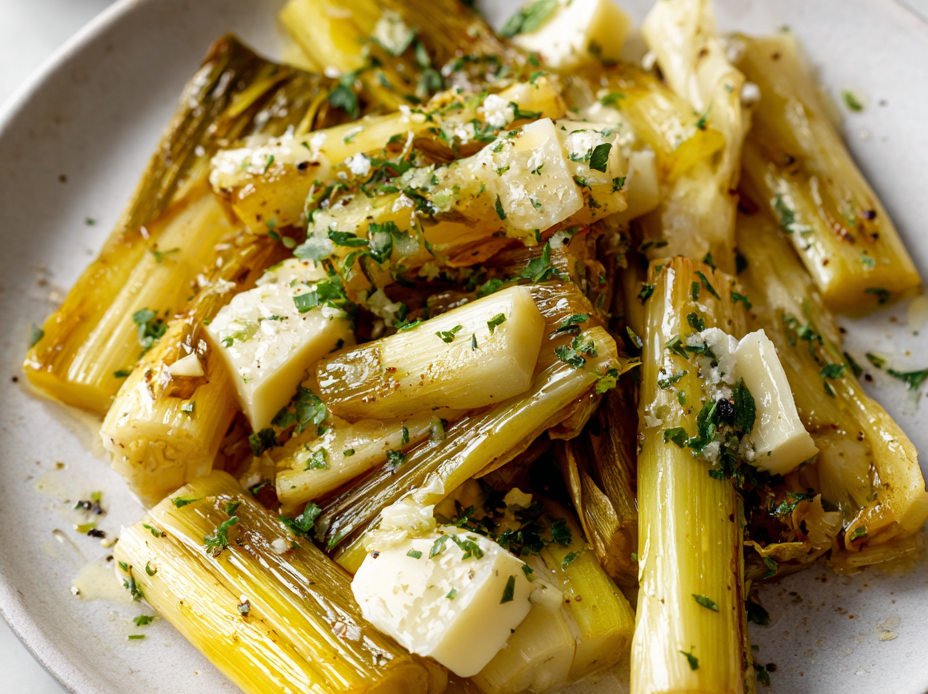
Sautéed leeks in butter might seem like just a simple side, but there’s a quiet magic in their transformation. Watching those pale, fibrous layers turn soft and translucent, releasing a gentle sweetness, feels like a small act of mindfulness in the kitchen. It’s a humble dish that rewards your patience with a subtle, buttery richness that elevates any plate.
I’ve always loved how leeks, often overshadowed by their more glamorous relatives like onions or garlic, hold their own when cooked slowly and gently. There’s a quiet elegance in their mellow flavor, especially when coated in butter and cooked to just the right tenderness. It’s honest food—no fuss, no pretension, just good ingredients doing their thing.
This recipe is my go-to whenever I want a moment of calm at the stove or need a versatile side that pairs with almost anything—fish, chicken, or even eggs. It’s a reminder that sometimes, the simplest ingredients, treated with care, can turn a regular dinner into a small celebration of everyday beauty.
Focusing on the overlooked beauty of simple ingredients—how a humble leek, cooked gently in butter, can elevate a weekday dinner into a moment of quiet gratitude.
The inspiration behind this dish
- I first stumbled upon this simple leek preparation during a rushed weeknight, when I needed something quick but flavorful. The way those leeks mellowed in butter, turning silky and sweet, reminded me how humble ingredients can surprise you when treated with patience. It’s become a go-to for moments when I crave comfort without fuss.
- There’s a memory of my grandmother gently sautéeing leeks in her tiny kitchen, filling the air with a buttery, onion-y aroma that seemed to slow down time. That quiet ritual has stayed with me, a reminder that good food is often about small, mindful acts. Now, I try to replicate that calm, tender moment in my own cooking, even on busy days.
- heading:
Key ingredients and tips
- Leeks: I love how their mild, sweet flavor develops when slowly cooked; you want them tender and just translucent, not mushy. Skip the tough outer leaves if they’re fibrous.
- Butter: My go-to for richness—makes the leeks glossy and mellow. If you prefer a lighter touch, olive oil works but loses some of that velvety finish.
- Salt: A pinch at the start helps break down the leeks’ fibers and enhances their natural sweetness. Taste as you go; too much can overpower.
- Pepper: Freshly cracked adds just the right punch. Keep it simple—sometimes a little black pepper is all you need to highlight the butter’s richness.
- Optional herbs (like thyme or chives): I toss in a sprig of thyme or chopped chives at the end for a fresh, herby lift. Skip if you want pure leek butter flavor.
- Lemon juice or vinegar: A splash at the end brightens everything up—especially if the leeks are a bit too sweet or dull. Use sparingly, just a hint of zing.
- Garlic (optional): I sometimes add a minced clove near the end for a gentle aroma. Overcooking garlic turns bitter, so keep it subtle.
Spotlight on key ingredients
Leeks:
- I love how their mild, sweet flavor develops when slowly cooked; you want them tender and just translucent, not mushy. Skip the tough outer leaves if they’re fibrous.
- Butter: My go-to for richness—makes the leeks glossy and mellow. If you prefer a lighter touch, olive oil works but loses some of that velvety finish.
Butter:
- Imparts a rich, nutty aroma that blooms as it melts. The key is gentle heating to avoid burning—watch that foam.
- Salt: It’s the secret to unlocking the leeks’ natural sweetness. Use sparingly at first, then taste before adding more.
Notes for ingredient swaps
- Dairy-Free: Swap butter for olive oil or coconut oil. Keep in mind, the richness and creamy mouthfeel will change slightly.
- Vegan: Use plant-based butter or margarine. You might lose some of that deep, buttery aroma, but the flavor still shines.
- Salt: If you prefer a lower sodium option, try a pinch of seaweed flakes for umami depth without extra saltiness.
- Herbs: Fresh thyme or chives add brightness, but dried herbs can be a good substitute if fresh aren’t available—just use half the amount.
- Acid: Lemon juice or vinegar brightens the dish. Apple cider vinegar adds a slight fruity tang, while lemon keeps it fresh.
- Butter Alternative: Ghee offers a nuttier, richer flavor; avoid overly processed oils to keep the dish grounded.
- Leeks: If unavailable, thinly sliced shallots or fennel can mimic the mild sweetness and texture, but leeks are best for that gentle onion-y flavor.
Equipment & Tools
- Large skillet: For even cooking and slow sautéing of the leeks.
- Sharp knife: For trimming and slicing the leeks cleanly.
- Wooden spoon: Gentle stirring to prevent sticking and break down fibers.
- Plate: To rest and serve the cooked leeks.
Step-by-step guide to sautéed leeks
- Equipment & Tools: Gather a large skillet (preferably cast iron), a sharp knife, and a wooden spoon for stirring. Have a plate ready for resting.
- Trim the leeks: Slice off the dark green tops and root end. Slice the white and pale green parts into 1 cm thick rounds or half-moons, depending on your preference.
- Clean thoroughly: Rinse the sliced leeks in a bowl of cold water or run under cold tap water to remove any grit trapped between layers. Drain well.
- Heat the skillet: Place over medium-low heat (around 150°C/300°F). Add 2-3 tablespoons of butter. Let it melt gently until it starts to foam but doesn’t brown.
- Add the leeks: Spread them evenly in the pan. Cook slowly, stirring occasionally. They should start to turn translucent after about 8-10 minutes.
- Cook until tender: Continue sautéing, adjusting heat if necessary. The leeks should soften, become slightly glossy, and develop a light golden hue around edges—about 10-15 minutes total.
- Check texture: Insert a small piece with a fork; it should be soft and silky. If they still feel fibrous, give them a few more minutes.
- Finish with seasoning: Lightly season with salt and freshly cracked black pepper. For extra flavor, toss in fresh herbs or a squeeze of lemon at this stage.
- Rest briefly: Remove from heat. Let the leeks sit for 1-2 minutes to settle and develop their flavors further.
- Plate and serve: Transfer to a serving dish. Drizzle with a little extra melted butter or a squeeze of lemon if desired. Serve warm.
Let the leeks rest for a minute or two off heat. Finish with a pat of butter or a squeeze of lemon for brightness. Serve directly onto warmed plates to keep warm and preserve their silky texture.
How to Know It’s Done
- Leeks are translucent and tender, not mushy or fibrous.
- Butter is lightly browned but not burnt, releasing a nutty aroma.
- Leeks develop a slight golden edge, inviting aroma and color.
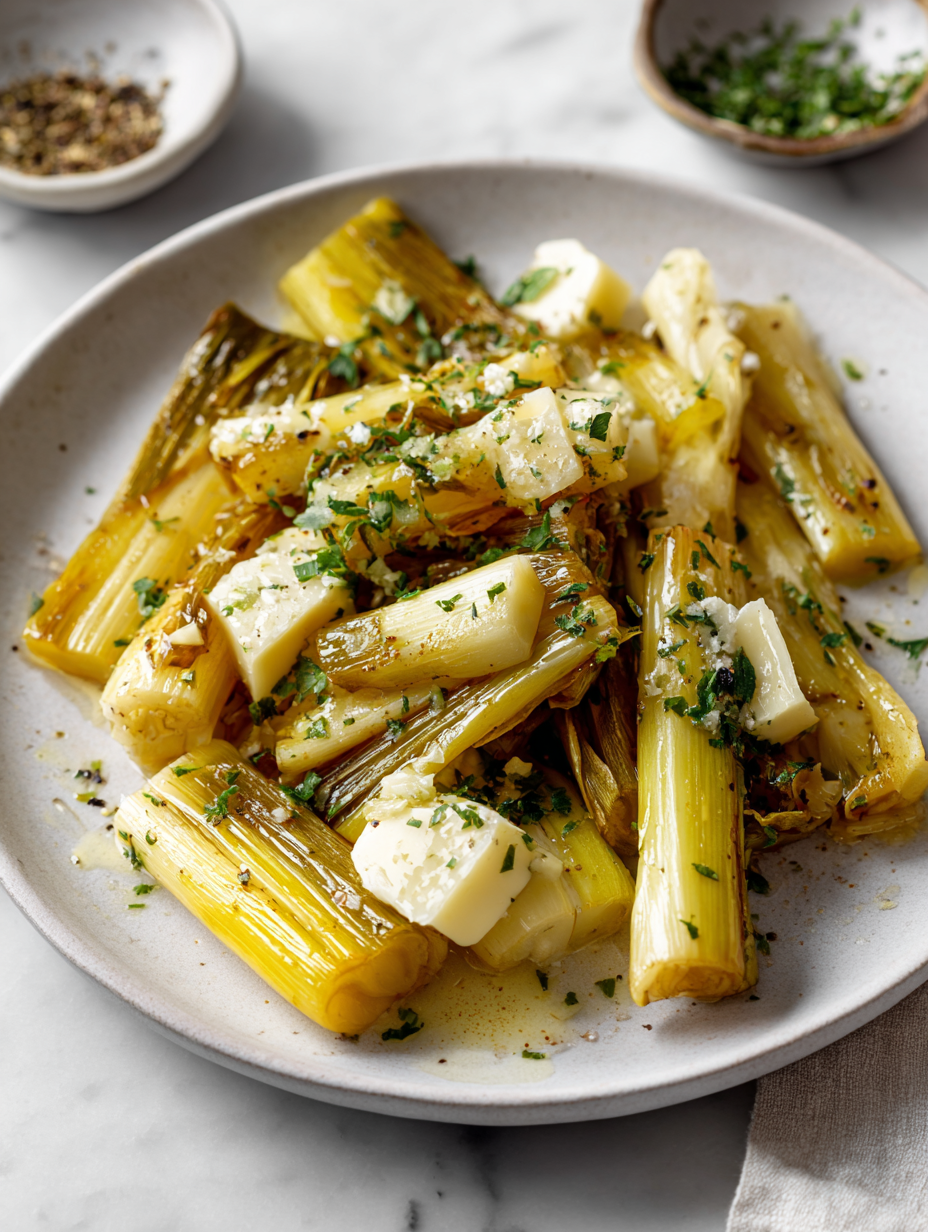
Sautéed Leeks in Butter
Ingredients
Equipment
Method
- Trim the dark green tops and root end from the leeks, then slice them into 1 cm thick rounds or half-moons.
- Rinse the sliced leeks thoroughly in a bowl of cold water to remove any grit trapped between layers, then drain well and set aside.
- Place your large skillet over medium-low heat and add the butter. Let it melt gently, listening for a soft sizzle and watching it foam without browning.
- Spread the leeks evenly in the skillet and cook slowly, stirring gently with a wooden spoon every few minutes. Watch for them to turn translucent and glossy, about 8-10 minutes.
- Continue cooking until the leeks are tender and have developed a light golden hue around the edges, about 10-15 more minutes. They should feel silky and soft when tested with a fork.
- Season the leeks with a pinch of salt and freshly cracked black pepper, then stir gently to distribute evenly. For extra brightness, squeeze in a tablespoon of lemon juice and stir again.
- Remove the skillet from heat and let the leeks sit for a minute or two, allowing the flavors to settle and the texture to become even silkier.
- Transfer the sautéed leeks to a warm plate, drizzle with a little extra melted butter if desired, and serve immediately. Enjoy their gentle sweetness and buttery richness as a perfect side dish.
Notes
Pro tips for perfect sautéed leeks
- Use medium-low heat to melt butter gently, preventing browning and ensuring a silky texture.
- Stir the leeks often as they cook; this helps them soften evenly and prevents sticking or burning.
- When leeks turn translucent with a slight golden edge, they’re perfectly cooked—watch for that gentle shimmer.
- Add a splash of water or broth if the leeks start to stick or brown too quickly—this keeps them tender.
- For a more aromatic flavor, toss in a sprig of thyme during cooking, then remove it before serving.
- Finish with a squeeze of lemon or a pinch of vinegar to brighten the richness and highlight the sweetness.
- If the leeks release too much moisture, increase heat slightly to evaporate excess liquid and concentrate flavor.
Common mistakes and how to fix them
- FORGOT to keep heat low during initial butter melting → Use medium-low to prevent burning.
- DUMPED all the butter at once → Add butter gradually for better control and flavor development.
- OVER-TORCHED the leeks at high heat → Cook slowly on low-medium for tender, translucent leeks.
- SKIPPED stirring regularly → Stir gently and often to prevent sticking and uneven cooking.
Quick fixes and pantry swaps
- When leeks release too much water → Splash a little more butter to sizzle away excess moisture.
- If butter burns quickly → Patch with a splash of cold water and reduce heat immediately.
- When leeks don’t soften → DUMP some broth or water, cover, and cook on low to speed up tenderizing.
- Over-torched butter smell → Shield with a teaspoon of lemon juice to refresh aroma and flavor.
- If you forget to rinse grit → Pan-fry leeks in a little oil first to help grit settle, then continue cooking.
Prepping and storing tips
- Prep the leeks: Clean, slice, and rinse them a day in advance. Keep in an airtight container in the fridge; they’ll stay fresh and grit-free for up to 24 hours.
- Store cooked leeks: Once cooled, transfer to an airtight container and refrigerate for up to 2 days. Reheat gently until warm, watching for steam and a slight shimmer of butter.
- Shelf life: Raw leeks last about a week in the fridge. Cooked leftovers are best enjoyed within 2 days for optimal flavor and texture.
- Reheating: Warm in a skillet over low heat or in the microwave, covered with a damp paper towel. Expect the leeks to soften further and develop a slightly mellow, buttery aroma. Avoid overheating to prevent sogginess.
Top questions about sautéed leeks
1. How do I pick good leeks?
Look for leeks that are firm, with fresh green tops and no slimy or yellowed parts. Their texture should be crisp and fresh.
2. How do I prepare leeks properly?
Slice off the dark green tops and root end. Slice the white and pale green parts, then rinse thoroughly to remove grit.
3. What temperature should I sauté leeks at?
Cook on low to medium-low heat, around 150°C/300°F. This gentle heat helps leeks soften without burning.
4. How do I know when leeks are cooked perfectly?
Look for translucent, tender leeks with a slight golden edge. They should be soft but still hold shape, not mushy.
5. Can I use oil instead of butter?
Use unsalted butter for richness. If you want a lighter version, olive oil works but will be less velvety.
6. When should I add salt to the leeks?
Add a pinch of salt early to help leeks soften and enhance their natural sweetness. Adjust to taste at the end.
7. Should I add acid after cooking?
A splash of lemon juice or vinegar at the end brightens up the dish, balancing the buttery richness with a tangy note.
8. How do I prevent the leeks from burning?
Stir gently and often to prevent sticking and ensure even cooking. Keep the heat gentle to avoid burning the butter.
9. How do I reheat sautéed leeks?
Reheat in a skillet on low heat or microwave covered with a damp towel. Expect them to soften and mellow further.
10. What if my leeks stay tough after cooking?
If the leeks are fibrous or tough, cook a little longer on low, or add a splash of water to help tenderize.
Sautéed leeks in butter might seem like just a simple side, but there’s a quiet magic in their transformation. Watching those pale, fibrous layers turn soft and translucent, releasing a gentle sweetness, feels like a small act of mindfulness in the kitchen. It’s a humble dish that rewards your patience with a subtle, buttery richness that elevates any plate.
I’ve always loved how leeks, often overshadowed by their more glamorous relatives like onions or garlic, hold their own when cooked slowly and gently. There’s a quiet elegance in their mellow flavor, especially when coated in butter and cooked to just the right tenderness. It’s honest food—no fuss, no pretension, just good ingredients doing their thing.

Hi, I’m Madison Lane, the cook, recipe creator, and heart behind this kitchen. Food has been part of my life for as long as I can remember. Some of my earliest memories are of standing beside my dad while he cooked, watching him move comfortably around the kitchen, tasting sauces, and explaining why patience mattered just as much as seasoning.
