
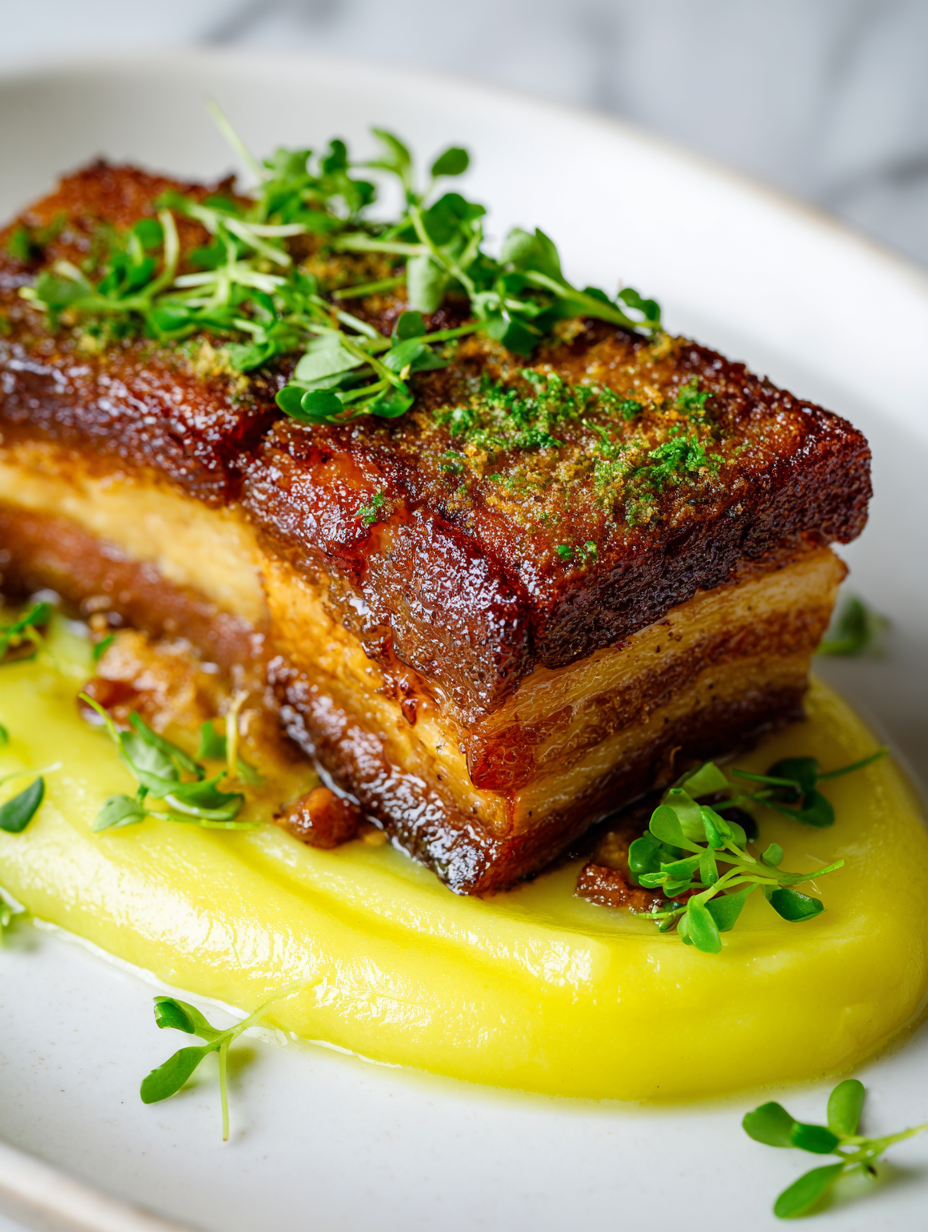
This pork belly with apple puree pairing started as an experiment in balancing richness with brightness. I was craving something hearty but didn’t want to drown in heavy flavors. The idea of crispy, slow-roasted pork belly paired with a zingy, fresh apple mash felt just right—unexpected but somehow natural.
I love how the crackle of the pork skin contrasts with the silky smoothness of the puree. It’s a dish that feels indulgent but also refreshes the palate, making it perfect for a cozy dinner or a special occasion without fussing over complicated techniques. It’s a reminder that simple ingredients, when combined thoughtfully, can surprise you.
Focusing on the unexpected pairing of crispy pork belly with a bright, tangy apple puree, this dish explores how simple ingredients can challenge comfort zones and elevate a humble meal into something uncommonly satisfying.
A Surprising Pairing
- I remember the first time I cracked crispy pork skin—pure joy and a bit of chaos, but totally worth it.
- That bright apple puree always takes me back to autumn afternoons in my grandma’s kitchen, peeling and slicing with care.
- Cooking pork belly feels like a little victory—slow and steady, but when it’s done right, it’s pure indulgence.
- There’s a quiet pride in balancing the richness of pork with the zing of fresh apple, like a perfect little duet on the plate.
- Sometimes, I just crave that crackling sound and the sharp, sweet burst of apple—comfort and excitement all in one bite.
A Surprising Pairing
Cooking pork belly always feels like a little celebration in my kitchen. I stumbled upon this pairing during a busy weekend when I wanted something rich but with a twist of brightness. The apple puree came from a lazy afternoon spent peeling and chopping, trying to balance the heaviness of the pork with something fresh and tangy. It’s become a dish I turn to when I want to impress without fuss, and every time I make it, I remember how simple ingredients can surprise you.
Historical and Cultural Notes
- Pork belly has been a prized cut across many cultures, especially in Chinese and Filipino cuisines, where slow braising and roasting bring out its rich, gelatinous qualities.
- The pairing of pork with apples dates back centuries in European kitchens, where the tartness of apples balanced the fattiness of pork, creating a harmony that’s stood the test of time.
- Apple puree was historically used as a way to add moisture and tang to hearty meat dishes during times when fresh ingredients were scarce, making it both a flavor booster and a preservation method.
Ingredient breakdown
- Pork belly: I love the contrast of crispy crackling and tender, fatty layers—if your skin isn’t crackling, crank up the heat or broil briefly to finish.
- Apple: Choosing a firm, tart apple like Granny Smith gives a bright, tangy puree—skip softer apples or sweeter varieties unless you want more sugar in the mix.
- Salt: I always season the pork generously at the start—don’t be shy, it’s the backbone of flavor—adjust after cooking if needed.
- Sugar: A touch of sugar in the apple puree balances tartness and enhances caramelization—omit if you prefer a less sweet finish.
- Vinegar: A splash of apple cider vinegar brightens the puree—if you don’t have cider vinegar, lemon juice works but be cautious of over-acidifying.
- Herbs & spices: I keep it simple with thyme or sage—feel free to add a bay leaf during roasting for extra aroma, but don’t overdo it.
- Oil: Use a neutral oil like vegetable or canola for roasting—olive oil adds flavor but can smoke more easily at high temps.
Spotlight on Key Ingredients
Pork Belly:
- I love the way the fat renders slowly, turning into a luscious, slightly crispy crackling—if your skin isn’t crackling, turn up the heat or broil briefly to finish.
- Pork belly has a rich, juicy texture that melts in your mouth—if it’s not tender enough, slow down the cooking or cover it for more moisture.
Apple:
- I pick tart, firm apples like Granny Smith—they give a bright, lemon-bright flavor that cuts through richness and adds a fresh tang.
- Apple’s natural sweetness and acidity can vary—if you want a smoother puree, cook them longer until they break down completely, or add a splash of lemon juice to enhance brightness.
Notes for ingredient swaps
- Pork Belly: I prefer a well-marbled piece for extra juiciness—if you want leaner, try pork shoulder, but it won’t get as crispy.
- Apple: Tart apples like Granny Smith are my go-to for bright, tangy puree—substitute with Braeburn or Fuji for sweeter, softer options.
- Salt: I season generously at the start—if you prefer less salt, reduce accordingly, but don’t skip it entirely, or the pork may taste flat.
- Sugar: A little sugar balances the acidity—skip or reduce if you want a more tart, pure apple flavor without sweetness.
- Vinegar: Apple cider vinegar adds brightness—lemon juice works as a quick substitute, but use less to avoid overpowering the puree.
- Herbs & spices: Thyme or sage are classic—try rosemary or bay leaf for different aromatic notes, but keep quantities modest.
- Oil: Neutral oils like vegetable or canola work best—olive oil adds flavor but can smoke at high temps, so keep an eye on it.
Equipment & Tools
- Oven: Cook the pork evenly and achieve crispy skin
- Wire rack: Elevate pork for even roasting and crisping
- Small saucepan: Cook and puree apples
- Immersion blender or masher: Puree apple mixture smoothly
- Sharp knife: Score the pork skin
- Baking sheet: Catch drippings and support the wire rack
Step-by-step guide to pork belly with apple puree
- Preheat your oven to 180°C (350°F). Score the pork belly skin in a crisscross pattern, being careful not to cut into the meat. Rub the skin generously with salt, ensuring it gets into the cuts. Let sit at room temperature for 30 minutes to help dry out the skin.
- Meanwhile, peel, core, and chop 3-4 tart apples (like Granny Smith). In a small saucepan, combine apples with a splash of water, a pinch of salt, and a teaspoon of sugar if desired. Cook over medium heat for about 15 minutes, stirring occasionally, until soft and slightly broken down. Puree with an immersion blender or mash until smooth. Set aside.
- Place the pork belly on a wire rack set over a baking sheet, skin side up. Roast in the oven for about 2 hours, or until the meat is tender and the skin is crispy. Every 30 minutes, baste the meat with its own juices to enhance moisture and flavor.
- In the last 20 minutes of roasting, increase the oven temperature to 220°C (430°F) or broil briefly, watching carefully. The skin should crackle and turn deep golden brown. If the skin isn’t crisping, briefly broil on high for 3-5 minutes, but keep a close eye to prevent burning.
- Remove the pork from the oven and let it rest for at least 10 minutes, loosely covered with foil. This helps the juices redistribute and makes slicing easier. Meanwhile, reheat the apple puree if needed and adjust seasoning with a splash of vinegar or a pinch more sugar.
- Slice the pork belly into thick, crispy pieces. Plate with a generous dollop of apple puree on the side. Drizzle a little of the pork’s natural juices over the slices for extra richness. Serve immediately while the crackling is still crackly.
Let the pork rest for at least 10 minutes, tented loosely with foil. Slice and serve immediately, with apple puree on the side. Drizzle juices over the pork for extra flavor.
How to Know It’s Done
- Pork skin is golden and crackling is crispy, not leathery.
- Meat is tender when pierced with a skewer, juices run clear.
- Apple puree is smooth, bright, and well-seasoned, with a balance of tartness and sweetness.
Crispy Pork Belly with Bright Apple Puree
Ingredients
Equipment
Method
- Preheat your oven to 180°C (350°F). Score the pork belly skin in a crosshatch pattern, making sure not to cut into the meat. Rub salt generously into the skin and into the cuts to help dry it out, then let it sit at room temperature for 30 minutes.
- Meanwhile, peel, core, and chop the tart apples. Place them in a small saucepan with a splash of water, a pinch of salt, and a teaspoon of sugar if you like a touch of sweetness. Cook over medium heat for about 15 minutes, stirring occasionally until the apples are soft and breaking down.
- Once cooked, puree the apples using an immersion blender or mash them until smooth. Stir in a tablespoon of apple cider vinegar or lemon juice to brighten the flavor. Adjust the seasoning with more salt or vinegar if needed. Keep warm for serving.
- Place the pork belly on a wire rack set over a baking sheet, skin side up. Roast in the oven for about 2 hours, basting with its juices every 30 minutes to keep it moist and flavorful.
- During the last 20 minutes of roasting, increase the oven temperature to 220°C (430°F). Keep an eye on the pork as the skin begins to crackle and turn deep golden. If not crisp enough, briefly broil on high for 3-5 minutes, watching carefully to prevent burning.
- Remove the pork from the oven and let it rest for at least 10 minutes, loosely covered with foil. Meanwhile, reheat the apple puree if needed and check the seasoning, adding a splash more vinegar or a pinch of sugar for balance.
- Slice the pork belly into thick, crispy pieces. Plate the slices alongside a generous spoonful of bright apple puree. Drizzle some of the pork’s natural juices over the slices for extra flavor and serve immediately while the crackling is still crispy and the puree fresh.
Notes
Pro tips for perfect pork belly
- Bolded: Crispy skin starts with thorough drying—pat the pork skin with paper towels before salting.
- Bolded: For crackling, increase oven temperature to 220°C (430°F) and broil briefly—watch closely to prevent burning.
- Bolded: Use a sharp knife to score the skin deeply but carefully—this helps salt penetrate and crackle form.
- Bolded: Baste the pork with its juices every 30 minutes—this keeps the meat moist and flavorful.
- Bolded: Puree apples until completely smooth—use an immersion blender for silky texture and bright flavor.
- Bolded: Rest the pork for at least 10 minutes—this redistributes juices and makes slicing easier.
- Bolded: Add a splash of vinegar to the apple puree—brightens the flavor and balances sweetness.
Common mistakes and how to fix them
- FORGOT to dry the pork skin thoroughly, fix with extra salting and high heat.
- DUMPED the apple puree before tasting, fix by adding a splash of vinegar or sugar.
- OVER-TORCHED the crackling, fix by reducing heat and broiling briefly for a better crackle.
- MISSED resting time, fix by letting the pork sit for at least 10 minutes before slicing.
Quick fixes and pantry swaps
- If skin isn’t crackling, blast under high heat for 3-5 minutes until crisp.
- When the apple puree is too tart, stir in a pinch of sugar or a splash of honey.
- Splash some vinegar if the pork feels greasy—brightens flavor instantly.
- Patch a crackling mishap with a quick broil—just watch closely, crackle comes alive fast.
- Shield overcooked pork with foil and lower oven temp to keep it moist while reheating.
Prep, store, and reheat tips
- You can prepare the apple puree a day in advance; store in an airtight container in the fridge for up to 2 days. Reheat gently, and adjust seasoning if needed, until warm and bright-smelling.
- Roasted pork belly can be made a few hours ahead; keep it covered in the fridge. Reheat in a low oven (around 150°C/300°F) until warmed through, then briefly broil to restore crispness if necessary.
- Slice the pork just before serving to keep the crackling crisp. Reheat slices gently to avoid losing texture and juiciness.
- For best flavor, bring the pork to room temperature before reheating. The apple puree can also be made ahead and chilled, but serve it slightly warmed for the best zing.
- Storage duration: apple puree and pork can last 1-2 days in the fridge. Reheat with care—smell and crackle will tell you if it’s still good.
Top questions about Pork Belly with Apple Puree
1. What kind of apples work best for the puree?
Choose firm, tart apples like Granny Smith for a bright, tangy puree. Softer or sweeter apples will give a different flavor profile, so pick according to your taste preference.
2. How do I get crispy pork skin?
Ensure the pork skin is thoroughly dried and scored deeply. Salting generously and broiling briefly at the end helps achieve that perfect crackle.
3. How long does pork belly need to cook?
Cook the pork at 180°C (350°F) for about 2 hours, then increase heat or broil for the last 5-10 minutes to crackle. Rest before slicing.
4. Can I make this dish ahead?
Reheat the sliced pork gently in a low oven or microwave. Warm the apple puree separately, and adjust seasoning with vinegar or sugar if needed.
5. What if the pork skin isn’t crispy?
If the skin isn’t crackling, try broiling on high for a few minutes. For uneven crackling, score the skin again or dry it thoroughly before roasting.
6. What oil should I use for roasting?
Use neutral oils like vegetable or canola for roasting to prevent smoking. Olive oil adds flavor but can burn at high temperatures.
7. When should I slice the pork?
Slice the pork after resting to keep the crackling crisp. Serve immediately for the best texture and flavor contrast.
8. How do I balance the apple puree?
Balance the flavors by adding a splash of vinegar or a pinch of sugar to the apple puree. Taste and adjust until bright and well-rounded.
9. How do I know when the pork is done?
Use a sharp knife for scoring the pork skin and check the doneness by the color of the crackling and tenderness of the meat.
10. How long can I keep leftovers?
Store leftovers in an airtight container in the fridge for up to 2 days. Reheat carefully to preserve texture and flavor.
This dish feels like a little celebration of contrasts—the crackling pork skin against the bright, tart apple puree. It’s a reminder that simple techniques and honest ingredients can surprise you, especially when you’re craving something satisfying yet fresh.
Whenever I make this, I’m struck by how much flavor can be packed into humble cuts and everyday fruit. It’s a dish that invites you to slow down, savor, and enjoy the little moments of crispy, juicy, tangy perfection.
Hi, I’m Madison Lane, the cook, recipe creator, and heart behind this kitchen. Food has been part of my life for as long as I can remember. Some of my earliest memories are of standing beside my dad while he cooked, watching him move comfortably around the kitchen, tasting sauces, and explaining why patience mattered just as much as seasoning.
