
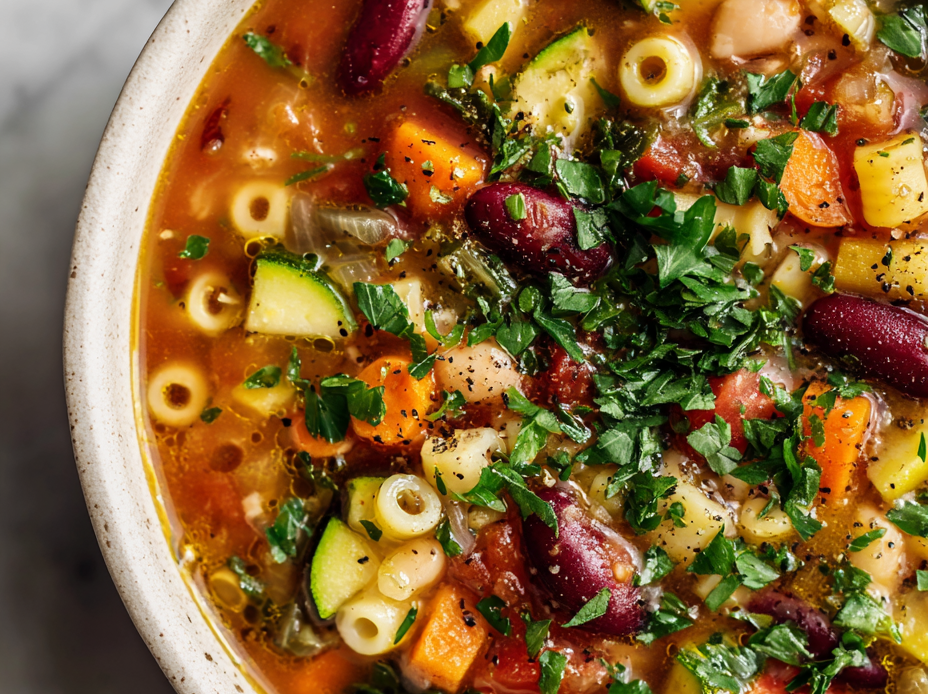
There’s something satisfying about tossing a bunch of humble ingredients into a slow cooker and coming back hours later to a bubbling pot of flavor. Minestrone, with its mix of beans, vegetables, and pasta, becomes especially cozy when cooked slowly, letting each element meld into something greater than the sum of its parts. It’s like a warm hug from your kitchen after a busy day.
This recipe is a reminder that good, nourishing food doesn’t need to be complicated or fussy. It’s about embracing the chaos—chopping a little here, stirring a little there—and trusting the slow cooker to do the heavy lifting. The house fills with the smell of garlic and simmering broth, making it hard to wait until dinner’s ready.
What I love most is how flexible it is—substitute what’s in your fridge, skip a step, or toss in your favorite greens at the end. It’s a practical, forgiving meal that tastes like you’ve been simmering it all day, even if you only have a few hours. Sometimes, simplicity really is the best comfort.
This recipe focuses on how a slow cooker transforms humble, everyday ingredients into a comforting, nourishing meal that tastes like it’s been simmering all day, yet comes together effortlessly. It’s about embracing the chaos of busy life while still craving that slow-cooked depth of flavor.
The story behind this recipe
- This minestrone recipe came from a day when I was overwhelmed—no time to cook, but craving warmth and something hearty. I realized I could throw everything into the crockpot and have it do the work overnight. It’s a simple fix for busy days, and the smell of garlic and herbs filling the house feels like a little victory.
- The idea of slow-cooking vegetables and beans until they’re tender, yet still holding their shape, makes me nostalgic. It reminds me of my grandma’s kitchen, where everything simmered slowly on the stove, filling the air with comforting scents. This recipe is my way of capturing that cozy, homey feeling with minimal fuss.
- Every time I make it, I think about how adaptable it is—whatever’s in the fridge, it can go in. It’s a reminder that good food doesn’t need to be complicated, just honest and patiently simmered. That quiet transformation in the crockpot makes me appreciate the slow, unhurried moments in cooking.
Key ingredients and tips
- Carrots: I like slicing them thin—cooks faster and releases a sweet, earthy aroma that fills the kitchen. Feel free to chop larger if you prefer bite-sized pieces with more bite.
- Canned Tomatoes: I prefer peeled, whole ones crushed by hand—gives a rustic, fresh flavor. You can swap with diced if you’re in a hurry, but the texture will be less saucy.
- Cannellini Beans: I drain and rinse them well—keeps the soup from becoming too starchy. For a creamier texture, mash a few beans at the end, or use Great Northern beans for more bite.
- Pasta: I toss in small shells or ditalini—nothing fancy, just enough to soak up the broth. Rice orzo can work too, but keep an eye on the cooking time, or it’ll turn mushy.
- Vegetable Broth: I choose homemade when I can—rich and full of flavor. Store-bought works fine, but look for low-sodium to control the salt, and add herbs for brightness.
- Olive Oil: I swirl a good splash at the start—brings out the garlic and vegetables’ sweetness. Finish with a drizzle for a shiny, flavorful finish, if you like that extra richness.
Spotlight on Key Ingredients
Cannellini Beans:
- I love how they turn silky and creamy after slow cooking, absorbing broth flavors. Feel free to swap for Great Northern beans if you prefer a firmer bite.
- Tomatoes: Their juicy, slightly acidic burst adds brightness, especially when crushed by hand for rustic texture. Use diced or passata if you’re after a smoother consistency.
Carrots and Pasta:
- Carrots: I slice them thin for quick cooking and a sweet, earthy aroma that fills the kitchen. Larger chunks can be used if you want a more hearty bite.
- Pasta: Small shells or ditalini soak up broth beautifully, adding a chewy contrast. Use rice orzo if you prefer a softer, more delicate bite.
Notes for ingredient swaps
- Dairy-Free: Skip Parmesan or cheese toppings, and opt for nutritional yeast for a cheesy flavor without dairy, though it won’t melt like cheese.
- Gluten-Free: Use gluten-free pasta or rice instead of traditional pasta to keep it friendly for gluten sensitivities, but watch cooking times as they vary.
- Vegetarian: Ensure you use vegetable broth and skip any meat-based ingredients for a plant-centric version that’s just as hearty.
- Low-Sodium: Choose low-sodium broth and rinse beans thoroughly to cut down on salt, but still maintain a flavorful, savory broth.
- Vegan: Omit cheese and use plant-based broth and beans; add a splash of lemon juice or a pinch of smoked paprika for extra brightness and depth.
- Pasta Substitute: Swap pasta for cooked quinoa or barley for a more grain-forward texture that’s equally filling and chewy, especially if you prefer a nuttier flavor.
- Fresh Herbs: Use fresh basil or parsley instead of dried herbs for a brighter, more vibrant flavor, especially added at the end for freshness.
Equipment & Tools
- Large slow cooker: To cook all ingredients slowly and evenly over hours.
- Sharp knife and cutting board: For chopping vegetables and herbs efficiently.
- Wooden spoon: For stirring the soup without scratching the slow cooker.
- Skillet: To sauté aromatics for deeper flavor before slow cooking.
Step-by-step guide to making minestrone
- Gather all your equipment: a large slow cooker (about 6-8 quart size), a sharp knife, a cutting board, and a wooden spoon for stirring. Having everything ready makes the process smoother.
- Prep your ingredients: dice carrots, celery, and onion into small, uniform pieces; roughly chop zucchini and kale; drain and rinse beans; crush canned tomatoes with your hands for a rustic texture.
- Heat a tablespoon of olive oil in a skillet over medium heat (about 160°C / 320°F). Add onions, carrots, and celery, sauté until fragrant (about 5 minutes), and they start to soften—smell that sweet, earthy aroma.
- Transfer sautéed veggies to the slow cooker. Add crushed tomatoes, beans, zucchini, kale, vegetable broth, a good pinch of salt, pepper, and your favorite herbs (thyme, oregano). Stir well to combine.
- Set your slow cooker to low (around 90°C / 195°F) and cook for 6-8 hours. If you’re in a rush, high (about 120°C / 250°F) for 3-4 hours works, but flavors meld better overnight.
- About 30 minutes before serving, taste and adjust seasoning. Add pasta at this stage if you like—ditalini or small shells work well. Cover and let it cook until al dente (about 10 minutes). Keep an eye on the liquid level, add a splash more broth if it thickens too much.
- Check the soup for doneness: the vegetables should be tender, pasta cooked through, and the flavors melded. The broth should be vibrant, and the beans creamy in texture.
- Turn off the slow cooker. Let the soup rest for 10 minutes—this allows flavors to deepen and settle. Ladle into bowls, garnish with a drizzle of olive oil or grated Parmesan if you like, and serve hot.
Allow the soup to sit off heat for 10 minutes to deepen flavors. Serve hot, garnished with a drizzle of olive oil or grated cheese for added richness.
How to Know It’s Done
- Vegetables tender but not mushy, with fragrant aromatics.
- Pasta cooked to al dente, absorbing flavors but still firm.
- Broth vibrant, slightly thickened, with a rich, inviting aroma.
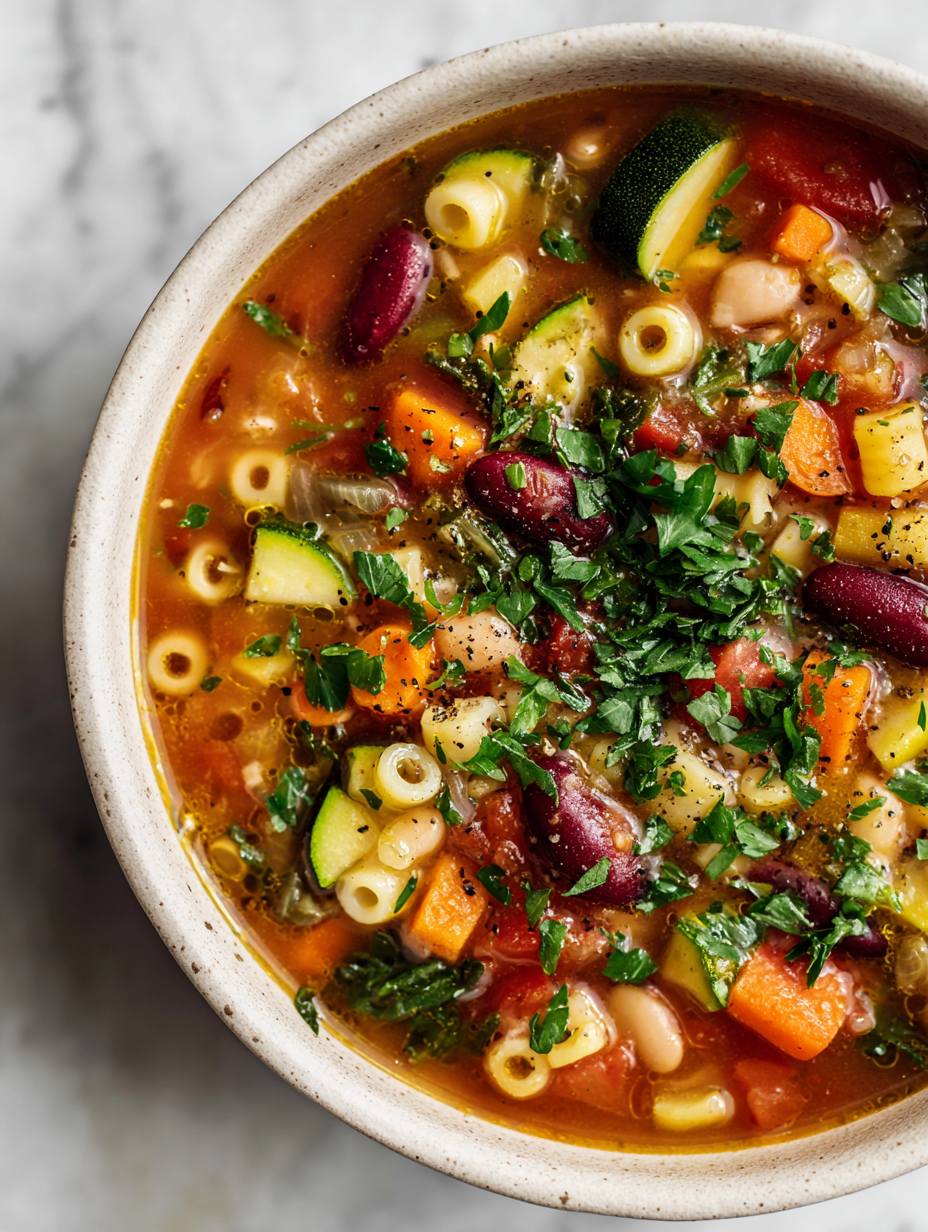
Slow Cooker Minestrone Soup
Ingredients
Equipment
Method
- Start by preparing your ingredients: slice carrots thinly, dice celery and onion, and chop zucchini into bite-sized pieces. Rinse and drain the beans, and crush the canned tomatoes with your hands for a rustic texture.
- Heat olive oil in a skillet over medium heat until it shimmers and begins to smell fragrant. Add diced onion, carrots, and celery, sautéing until the vegetables soften slightly and develop a sweet aroma, about 5 minutes. This helps build a flavorful base.
- Transfer the sautéed vegetables to your slow cooker. Add the chopped zucchini, crushed tomatoes with juices, rinsed beans, and vegetable broth. Season with salt and pepper, then stir everything together to combine.
- Set your slow cooker to low and cook for 6 to 8 hours, or on high for 3 to 4 hours. The house will fill with the aroma of garlic and herbs as everything slowly simmers and melds into a rich, rustic broth.
- About 30 minutes before serving, stir in the small pasta shells and minced garlic. Cover and cook until the pasta is al dente, about 10 minutes. Keep an eye on the liquid level; add more broth if it thickens too much.
- Once the pasta is cooked and the flavors are well melded, taste the soup and adjust seasoning with more salt, pepper, or herbs as needed. Sprinkle fresh basil or parsley over the top for a burst of freshness.
- Serve the minestrone hot, garnished with a drizzle of olive oil or a sprinkle of Parmesan if desired. Enjoy this comforting, hearty bowl that tastes like it’s been simmering all day.
Notes
Pro tips for perfect minestrone
- Use fresh herbs at the end to brighten the soup’s flavor.
- Sauté aromatics until fragrant—this builds a sweet, smoky base.
- Layer ingredients in the slow cooker for better texture and depth.
- Adjust liquid levels towards the end—broth should be vibrant but not soupy.
- For a thicker soup, mash some beans or pasta slightly before serving.
- Use the sautéed veggies’ caramelized bits—don’t scrape them off—flavor bombs.
- Add greens like kale or spinach in the last 10 minutes for freshness and color.
Common mistakes and how to fix them
- FORGOT to brown vegetables first → Sauté them briefly to boost flavor.
- DUMPED in all ingredients at once → Layer ingredients for better texture and flavor.
- OVER-TORCHED the soup → Keep an eye on heat to prevent burning or sticking.
- MISSED adjusting seasoning → Taste and tweak salt or herbs at the end for balance.
Quick fixes and pantry swaps
- When soup tastes flat → Splash in a dash of vinegar or lemon juice to brighten flavors.
- If soup is too thick → Patch with a little hot broth, stir, and simmer briefly.
- When vegetables are undercooked → Shield with a lid and cook a few more minutes until tender.
- Dumped in too much salt → Rescue with a peeled potato to absorb excess salt, then discard.
- When pasta overcooks → Swap with pre-cooked or add at the end, then quickly simmer to rehydrate.
Prep, store, and reheat tips
- Chop vegetables and herbs the night before—keeps your morning stress-free and speeds up cooking.
- Store prepped ingredients in airtight containers in the fridge; they’ll stay fresh for up to 24 hours, preserving their bright flavors and crispness.
- Cooked soup keeps well in the fridge for 3-4 days; reheat gently on the stove, smelling for that familiar, comforting aroma.
- For longer storage, freeze soup in portions for up to 3 months; the flavors deepen and develop a richer, more robust taste after freezing.
- Reheat in a pot over low heat, stirring occasionally; aim for a simmer that warms evenly, with the broth still vibrant and fragrant.
Top questions about minestrone soup
1. Can I use dried beans instead of canned?
Use dried beans soaked overnight for a creamier texture, but canned beans are quicker and just as good.
2. When should I add the pasta?
Add pasta towards the end of cooking, about 10-15 minutes before serving, to avoid mushiness.
3. Should I add herbs during cooking or at the end?
Stir in fresh herbs like basil or parsley at the end for a bright, fresh flavor that lifts the soup.
4. My soup is too thick, what can I do?
If the soup is too thick, add a splash of hot broth or water to loosen it up before serving.
5. Can I sauté the vegetables beforehand?
For a richer flavor, sauté the vegetables first in a bit of olive oil before adding to the slow cooker.
6. Can I customize the vegetables?
Use a mixture of vegetables you have on hand—zucchini, spinach, or green beans work well as extras.
7. Should I let the soup sit before serving?
Let the soup rest for 10 minutes after cooking; it helps flavors meld and makes serving easier.
8. How long can I store leftovers?
Store leftovers in an airtight container in the fridge for up to 4 days, or freeze for up to 3 months.
9. How do I reheat the soup?
Reheat gently on the stove over low heat, stirring occasionally, until steaming hot and fragrant.
10. How can I enhance the flavor before serving?
Add a squeeze of lemon juice or a sprinkle of Parmesan just before serving for extra brightness and flavor.
This minestrone soup is my go-to on busy days when I crave something nourishing without the fuss. The slow cooker turns everyday ingredients into something deeply flavorful, with that comforting, home-cooked smell filling the house. It’s a reminder that simple, honest cooking can be both practical and satisfying.
Whenever I make it, I appreciate how forgiving and adaptable it is—toss in what you have, tweak the seasonings, and let the slow cooker do its magic. It’s the kind of meal that feels like a warm embrace, especially when the weather turns cooler or I need a little comfort. That slow build of flavors makes every spoonful worth the wait.
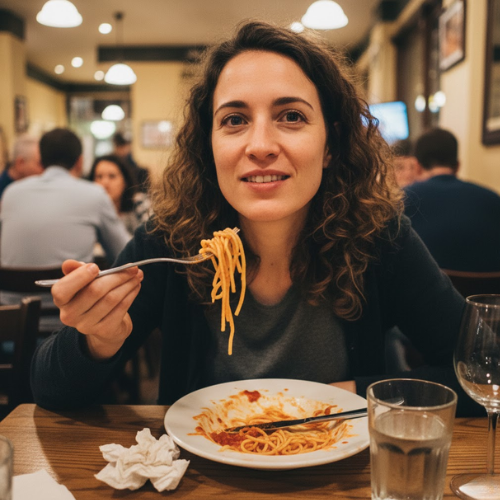
Hi, I’m Madison Lane, the cook, recipe creator, and heart behind this kitchen. Food has been part of my life for as long as I can remember. Some of my earliest memories are of standing beside my dad while he cooked, watching him move comfortably around the kitchen, tasting sauces, and explaining why patience mattered just as much as seasoning.
