
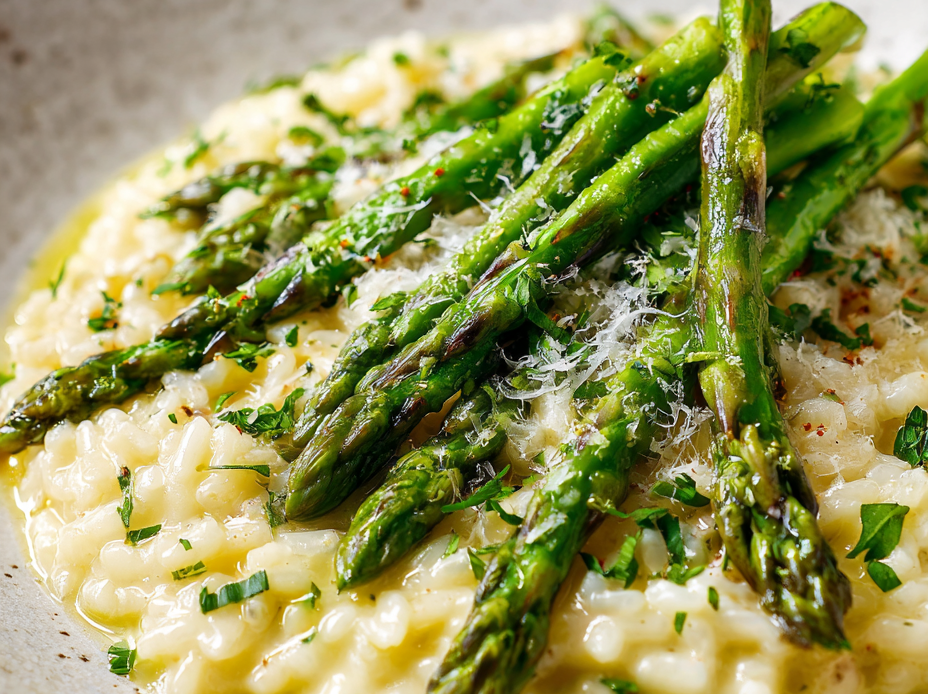
This creamy asparagus risotto is a little different from the usual. I love how slowly caramelizing the onion with the asparagus tips brings out a gentle sweetness that’s subtle but makes the whole dish richer. It’s a technique I stumbled on by accident, and now I can’t imagine making risotto any other way.
The trick is in that patience—letting the onion soften until it’s golden, then adding the asparagus tips and letting them sweat down gently. It’s about building layers of flavor, not rushing through the process. The final dish feels indulgent but also somehow simple, a real comfort for any season.
There’s a quiet satisfaction in stirring the rice slowly, watching it turn translucent and absorbing all that flavorful broth. When finished, the risotto should be velvety, with a slight bite to the rice and a fresh, bright note from the asparagus. It’s a dish that feels like a small celebration of everyday ingredients.
Focusing on the overlooked technique of slowly caramelizing onion with asparagus tips before adding rice, to deepen flavor and add a subtle sweetness that balances the creamy Parmesan.
The story behind this recipe
This dish came about from a lazy Sunday afternoon craving. I wanted something that felt both cozy and a little special, but didn’t require a ton of fuss. Asparagus was in season, just starting to peek out, and I remembered how my grandmother used to toss fresh greens into everything for a splash of brightness. That memory, combined with a recent obsession with creamy textures, led me to experiment with caramelizing the tips for depth and adding Parmesan for that salty, nutty kick. Turns out, it’s a little more than just comfort food — it’s a reminder that simple ingredients can transform when treated with patience and care.
Ingredient breakdown
- Fresh asparagus: I love the snap and bright green aroma it brings. If your asparagus is limp, blanch it briefly to revive that vibrancy.
- Arborio rice: Its creamy starch is the backbone of this dish. If unavailable, Carnaroli can work, but don’t skip the toasting step to build flavor.
- Parmesan: The salty, nutty bite makes everything come together. Use freshly grated for the best melt and aroma.
- Vegetable broth: I prefer homemade or low-sodium, so I control the salt and get a richer, cleaner flavor. Store-bought works fine too.
- Onion: Slowly caramelized, it adds a deep sweetness. Skip this step for a more straightforward, less layered flavor.
- Butter: Adds richness and helps meld flavors. For a lighter version, reduce or substitute with a splash of olive oil.
- White wine: I use a dry one for a subtle acidity that balances the creaminess. Don’t worry if you skip it; broth works as a good substitute.
Spotlight on key ingredients
Asparagus:
- Fresh asparagus: I love the snap and bright green aroma it brings. If your asparagus is limp, blanch it briefly to revive that vibrancy.
- Arborio rice: Its creamy starch is the backbone of this dish. If unavailable, Carnaroli can work, but don’t skip the toasting step to build flavor.
- Parmesan: The salty, nutty bite makes everything come together. Use freshly grated for the best melt and aroma.
Parmesan:
- Its rich, nutty aroma intensifies as it melts, creating that velvety sauce. Freshly grated, it’s key for maximum flavor.
- Parmesan melts quickly, so add it at the end for that glossy, cheesy finish. Watch for clumps—stir well.
- The texture of grated Parmesan varies, so aim for a fine, fluffy grate to melt smoothly into the hot risotto.
Notes for ingredient swaps
- Dairy-Free: Use a plant-based cheese or nutritional yeast instead of Parmesan. It won’t have the same nutty richness but adds a cheesy umami.
- Vegan: Swap butter with olive oil and skip the Parmesan; add a splash of lemon for brightness and nutritional yeast for depth.
- Gluten-Free: Ensure broth is gluten-free, and use Arborio rice—most brands are naturally gluten-free, but double-check labels.
- Lower Sodium: Opt for low-sodium broth and Parmesan, or skip the cheese altogether for a lighter, less salty profile.
- Extra Creamy: Stir in a dollop of cashew cream or a splash of full-fat coconut milk at the end for added richness and a subtle coconut note.
- Herb Boost: Add fresh herbs like basil, thyme, or chives to brighten the dish. Use dried herbs if fresh aren’t available, but reduce quantity.
- Lemon Zest: Incorporate lemon zest or a squeeze of lemon juice to lift the flavors and add a fresh, zesty contrast.
Equipment & Tools
- Wide, heavy-bottomed pan: Distributes heat evenly for uniform cooking and stirring.
- Ladle: To add warm broth in controlled, manageable amounts.
- Stirring spoon: Helps to gently stir the rice without breaking grains.
- Small saucepan: To keep broth warm and ready for quick addition.
Step-by-step guide to creamy asparagus risotto
- Gather your equipment: a wide, heavy-bottomed pan (for even heat), a ladle (for broth), and a stirring spoon. Have your ingredients measured out and ready to go—mise en place makes this much smoother.
- Heat vegetable broth in a small saucepan, keep it at a gentle simmer—around 80°C/175°F. This ensures quick addition without cooling the rice.
- In the main pan, melt a tablespoon of butter over medium heat (about 160°C/320°F). Add finely chopped onion and cook, stirring, until translucent and fragrant—about 5 minutes. Let it turn a light golden for depth.
- Add the asparagus tips first—about 1/4 inch (0.6 cm) chopped—let them soften for 2 minutes, then stir in the rice. Toast the rice, stirring constantly, until it turns translucent at the edges—about 2 minutes.
- Pour in a splash (about 1/4 cup) of dry white wine. Let it cook until mostly evaporated, about 1-2 minutes, releasing a faint aroma of crisp grapes.
- Start adding the warm broth, one ladleful (about 1/2 cup) at a time. Stir gently but constantly, allowing each addition to be absorbed before the next. Keep the heat at medium (160°C/320°F) but adjust if it simmers too hard or stalls.
- After about 15 minutes, taste the rice. It should be creamy but still have a slight bite—al dente. If not, continue adding broth and stirring, testing every few minutes.
- When the rice is nearly done, stir in grated Parmesan and a final knob of butter. Turn off the heat and let it rest for 2 minutes—this helps the flavors meld and the texture to settle.
- Serve immediately, garnished with a little extra Parmesan and a squeeze of lemon if desired. The risotto should be velvety, with a gentle sheen, and the asparagus bright and tender.
Once the risotto is off the heat, stir in the Parmesan and a knob of butter. Let it sit for 2 minutes, uncovered, to settle and develop its velvety texture. Serve immediately, garnished with extra Parmesan and a squeeze of lemon if you like.
How to Know It’s Done
- The rice should be al dente, with a slight firmness in the center when tasted.
- The risotto should have a creamy, velvety texture that gently coats the back of a spoon.
- The asparagus tips should be bright green and tender but not mushy, with a slight snap.
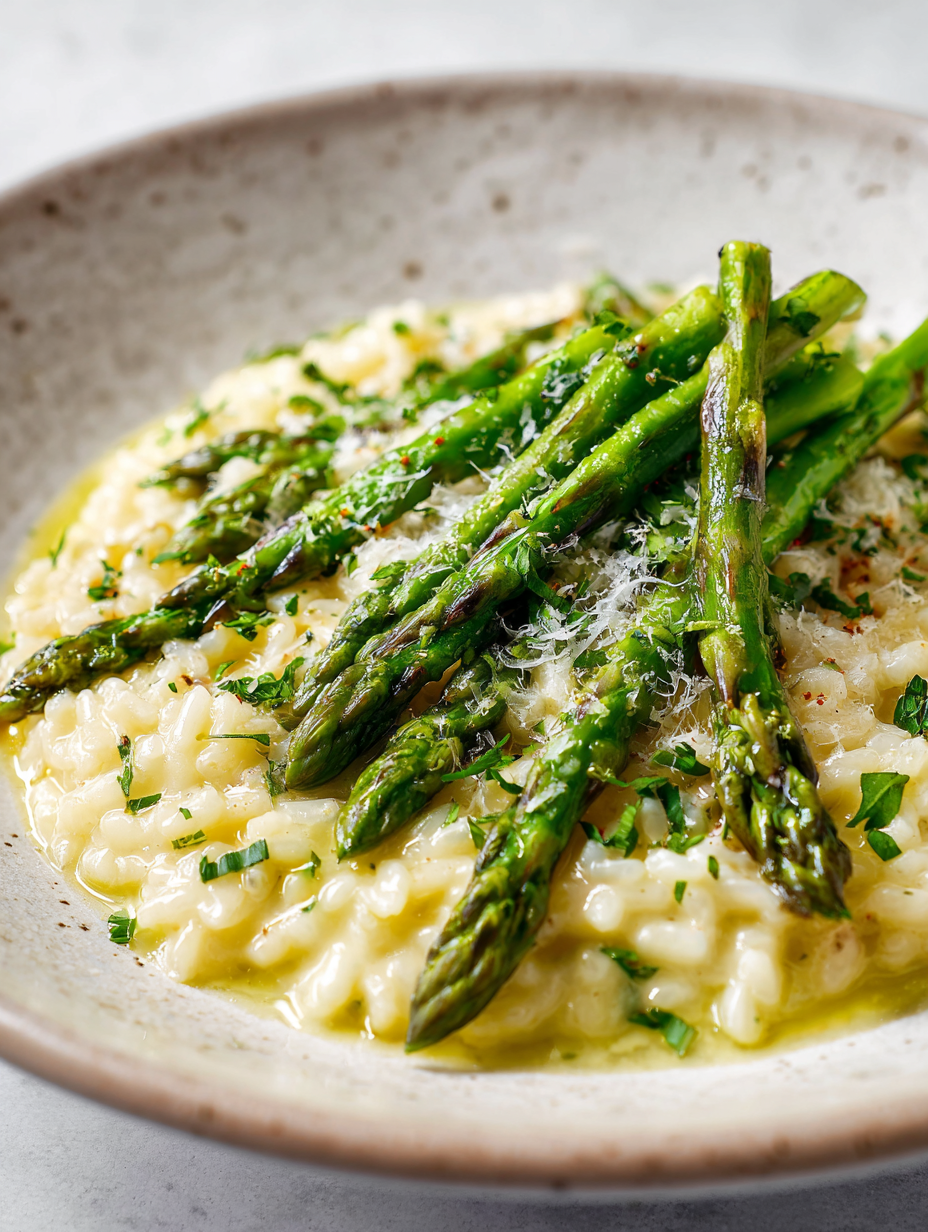
Creamy Asparagus Risotto
Ingredients
Equipment
Method
- Trim the asparagus, keeping the tips whole, and chop the remaining stalks into small pieces. Measure out all ingredients and have your broth simmering in a small saucepan.
- Heat the broth gently over low heat, keeping it just at a simmer so it’s ready for quick addition.
- In your wide pan, melt the butter over medium heat until it starts to foam and smells nutty. Add the chopped onion and cook, stirring often, until it turns translucent and begins to caramelize slightly, about 5 minutes.
- Add the asparagus tips to the pan and cook for about 2 minutes, stirring gently, until they soften slightly and release a fresh aroma.
- Stir in the Arborio rice, and toast it for about 2 minutes, stirring constantly, until the edges become translucent and the rice starts to turn a faint milky color.
- Pour in the white wine and stir until it’s mostly evaporated, about 1-2 minutes, filling the kitchen with a faint fruity aroma.
- Begin adding warm broth, one ladleful (about 1/2 cup) at a time, stirring gently but constantly. Wait until each addition is mostly absorbed before adding the next, maintaining a gentle simmer.
- Continue this process, stirring often, until the rice is tender but still slightly al dente, about 15-20 minutes.
- Remove the pan from heat and stir in the grated Parmesan cheese to melt into the creamy rice. Let the risotto rest for 2 minutes to allow flavors to meld and the texture to thicken slightly.
- Gently fold in the bright green asparagus tips, then serve immediately, garnished with extra Parmesan if desired. The risotto should be velvety, with a slight sheen and fresh aroma.
Notes
Tips for perfect creamy risotto
- BOLD THE RICE: Toast the rice until it’s translucent at the edges; this builds flavor and enhances creaminess.
- LADLE WITH CARE: Add broth gradually, about half a cup at a time, stirring constantly to release the rice’s starch.
- HEAT CONTROL: Keep the simmer gentle—around 80°C/175°F—to prevent sticking and ensure even cooking.
- PARMESAN MELT: Stir in freshly grated Parmesan off the heat for a glossy, melty finish without clumps.
- ASPARAGUS CRISPNESS: Add asparagus tips late in cooking—just a few minutes—so they stay tender but retain their vibrant green color.
- FINISH WITH FAT: A final knob of butter and a sprinkle of Parmesan at the end make the risotto luxuriously velvety.
- REST BEFORE SERVING: Let the risotto sit off heat for 2 minutes; this helps the flavors meld and the texture settle.
Common mistakes and how to fix them
- FORGOT to stir frequently → Stir constantly for creamy texture.
- DUMPED all broth at once → Add broth gradually for even cooking.
- OVER-TORCHED the rice → Maintain medium heat, avoid high flames.
- SKIPPED tasting tests → Taste rice often to check doneness and seasoning.
Quick fixes and pantry swaps
- When risotto looks grainy, splash in hot broth and stir vigorously to re-emulsify.
- If Parmesan clumps, fold it in off the heat to melt gently without seizing.
- Splash a little lemon juice when asparagus turns dull to brighten the dish.
- Patch overcooked risotto with extra broth and a pat of butter for creaminess.
- Shield burnt rice by removing pan from heat immediately and starting fresh with new broth.
Prep, store, and reheat tips
- Prepare the broth and chop the asparagus tips ahead; store in airtight containers in the fridge for up to 1 day. The aroma of fresh green and earthy notes will be ready for quick assembly.
- You can cook the risotto (without Parmesan) up to 2 hours in advance. Keep it covered in the fridge; reheating will bring back its velvety texture, but it might lose some brightness.
- Reheat gently on the stovetop over low heat, stirring frequently. Add a splash of hot broth if it thickens too much, and expect a slightly creamier, more subdued flavor profile.
- Grate Parmesan fresh just before serving for maximum flavor; pre-grated cheese will lose some of its pungency and melt slower during reheating.
- Note: Risotto tends to thicken as it cools, so adjust with hot broth during reheating to restore that creamy consistency and ensure it feels lively on the tongue.
Top questions about creamy asparagus risotto
1. How do I pick the best asparagus for this dish?
Use fresh, firm asparagus with vibrant green tips; wilted or limp spears won’t give the same bright flavor.
2. Why is stirring important during cooking?
Stir the rice constantly as you add broth; this releases starch and creates that creamy texture we want.
3. Can I add all the broth at once?
Add broth gradually, about half a cup at a time, and wait until it’s absorbed before adding more.
4. How do I know when the risotto is done?
Taste the rice early and often—aim for a slight bite, not mush, before finishing with cheese.
5. What temperature should I cook the risotto at?
Keep the heat moderate—around 160°C/320°F—to prevent burning and ensure even cooking.
6. When should I add the Parmesan?
Finish with Parmesan off the heat for the best melt and flavor. Stir it in thoroughly.
7. How do I reheat leftover risotto without it becoming gluey?
If the risotto thickens too much during reheating, stir in a splash of hot broth to loosen it up.
8. Can I use pre-grated Parmesan?
Use freshly grated Parmesan for maximum flavor and a smooth melt. Pre-grated cheese can be clumpy.
9. Should I add lemon to this risotto?
Adding a squeeze of lemon brightens the dish and balances the richness of the cheese and butter.
10. Is this risotto best in a particular season?
Yes! This dish is perfect for spring, when asparagus is at its peak and fresh flavors shine.
This risotto isn’t just about comfort—it’s a gentle reminder that patience and simple ingredients can turn into something memorable. The aroma of melting Parmesan and the tender bite of asparagus make each spoonful feel like a small celebration of seasonality.
Whenever I make this dish, I think of how a little extra care in caramelizing and stirring slowly transforms the ordinary into something rich, bright, and satisfying. It’s honest food, meant to be enjoyed with good company or a quiet moment of gratitude for good ingredients.

Hi, I’m Madison Lane, the cook, recipe creator, and heart behind this kitchen. Food has been part of my life for as long as I can remember. Some of my earliest memories are of standing beside my dad while he cooked, watching him move comfortably around the kitchen, tasting sauces, and explaining why patience mattered just as much as seasoning.
